
Unlock 1 -Unit 2 – Seasons – LS – Vocabulary 1

The vocabulary introduced here is from the “Unlock 1”, Listening and Speaking book. Specifically, it comes from the second unit { Seasons} and it is the first vocabulary set.
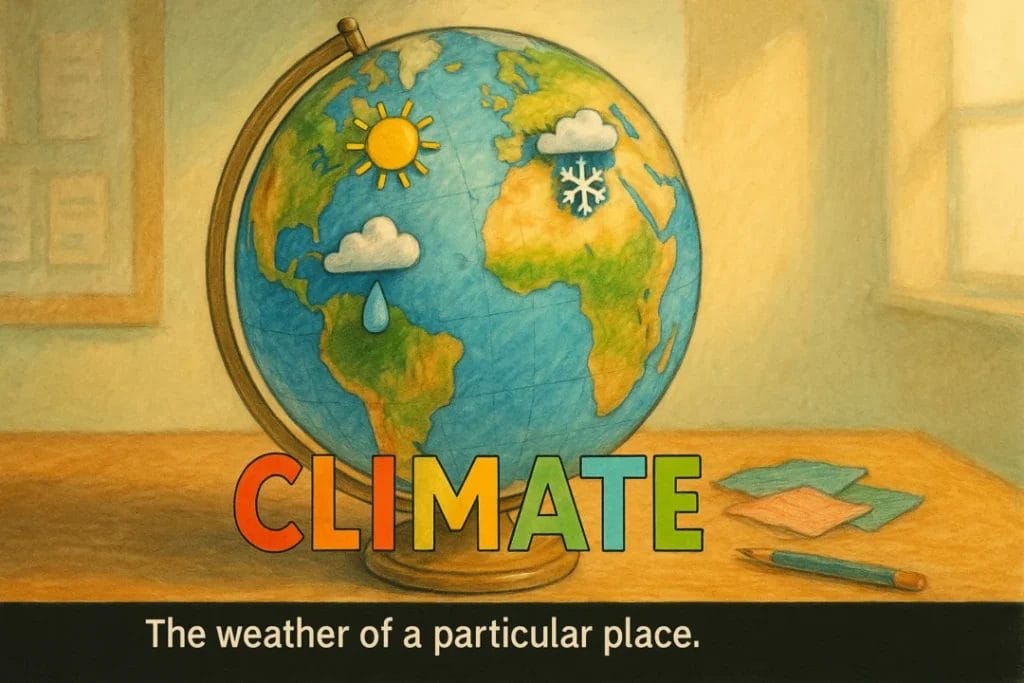
Climate Definition: The weather of a particular place.
- The climate in the desert is very hot and dry all year.
- She moved to a place with a warm climate to enjoy sunny days.
- The climate near the mountains is cooler than in the city.
- Real World Use Case: 🔗 Climate on Youglish
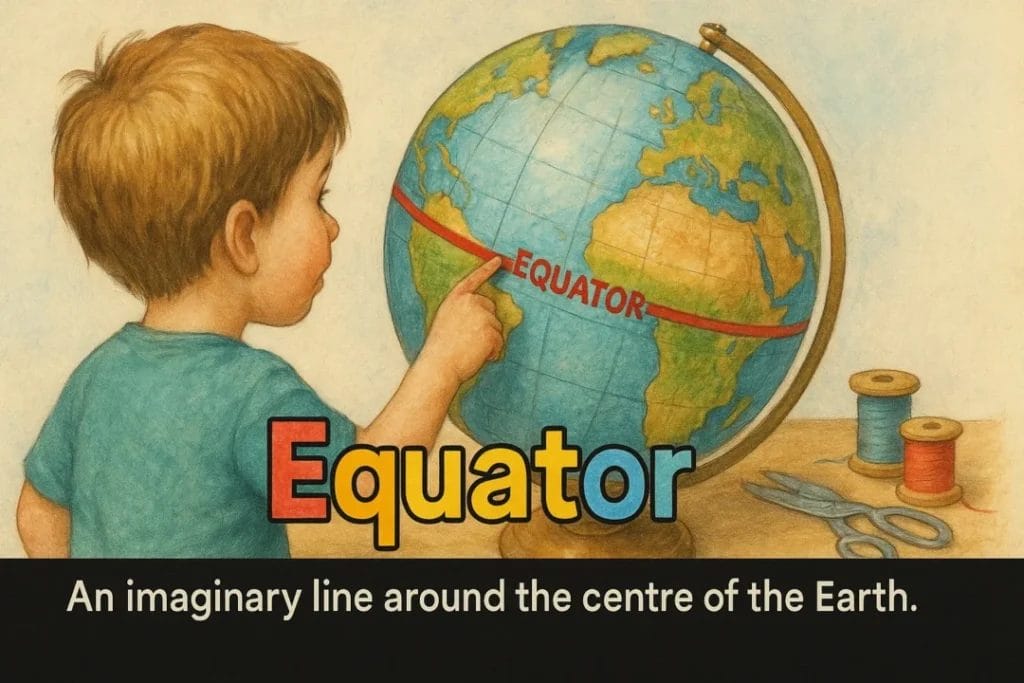
Equator Definition: An imaginary line around the centre of the Earth.
- Countries near the equator are usually very warm all year round.
- The equator divides the Earth into the northern and southern halves.
- She traveled to a country on the equator to see tropical forests.
- Real World Use Case: 🔗 Equator on Youglish
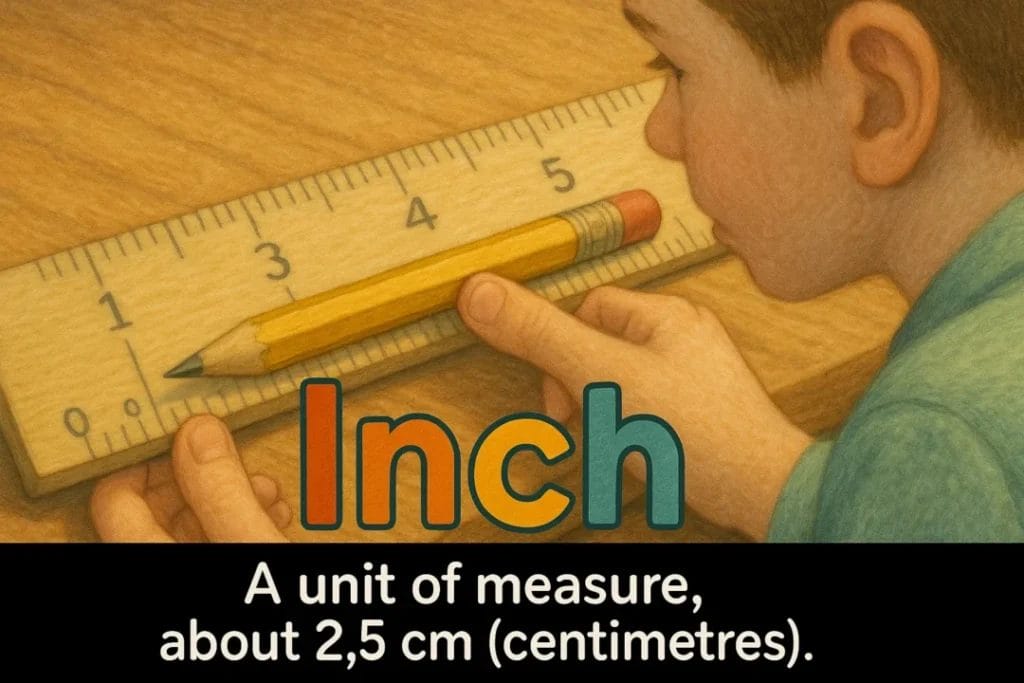
Inch Definition: A unit of measure, about 2.5 cm (centimetres).
- The book was only one inch thick, so it was easy to carry.
- He measured the table and found it was 30 inches long.
- The rain left half an inch of water in the bucket.
- Real World Use Case: 🔗 Inch on Youglish
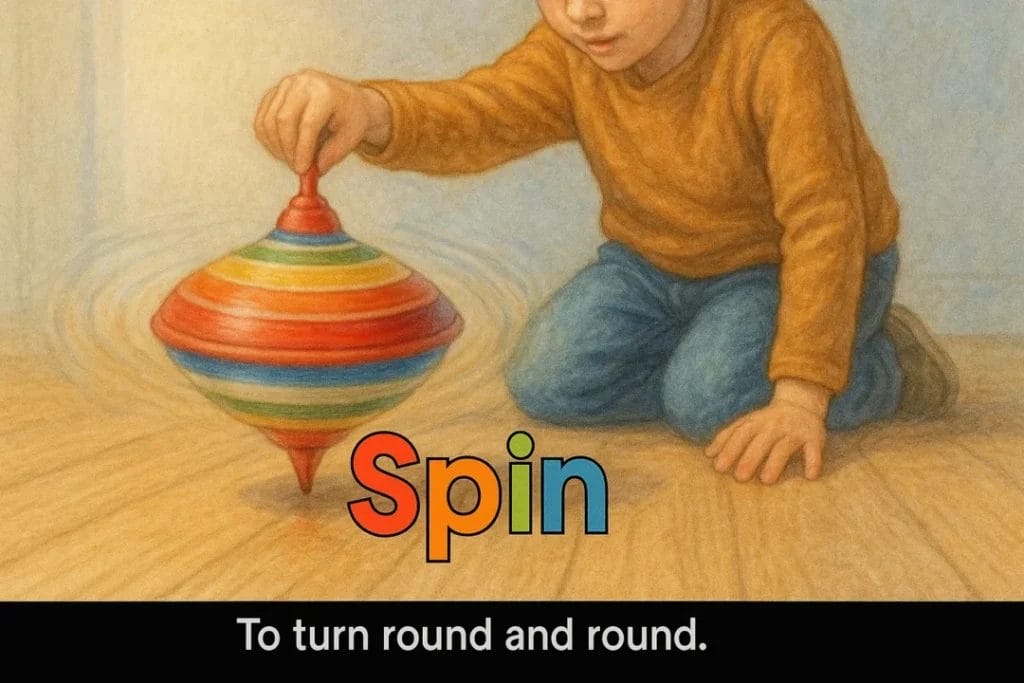
Spin Definition: To turn round and round.
- The toy top began to spin when she pulled the string.
- He likes to spin in circles until he feels dizzy.
- The wheel on the bike will spin faster if you pedal quickly.
- Real World Use Case: 🔗 Spin on Youglish
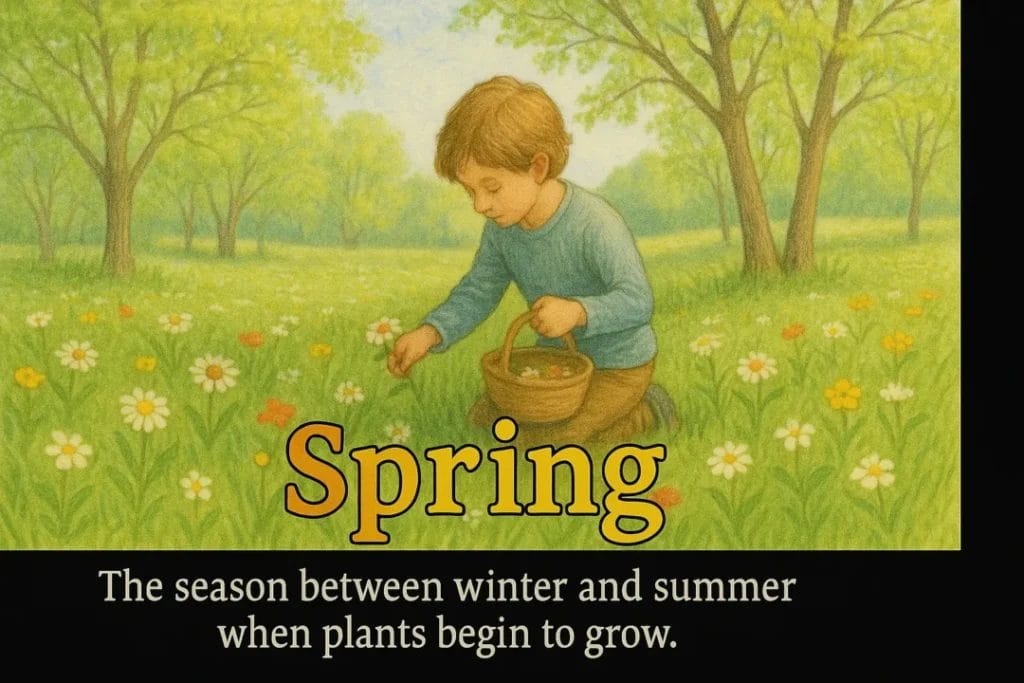
Spring Definition: The season between winter and summer when plants begin to grow.
- In spring, flowers bloom and make the garden colorful.
- We planted seeds in spring because the weather is warm.
- The spring sun helped the trees grow new green leaves.
- Real World Use Case: 🔗 Spring on Youglish
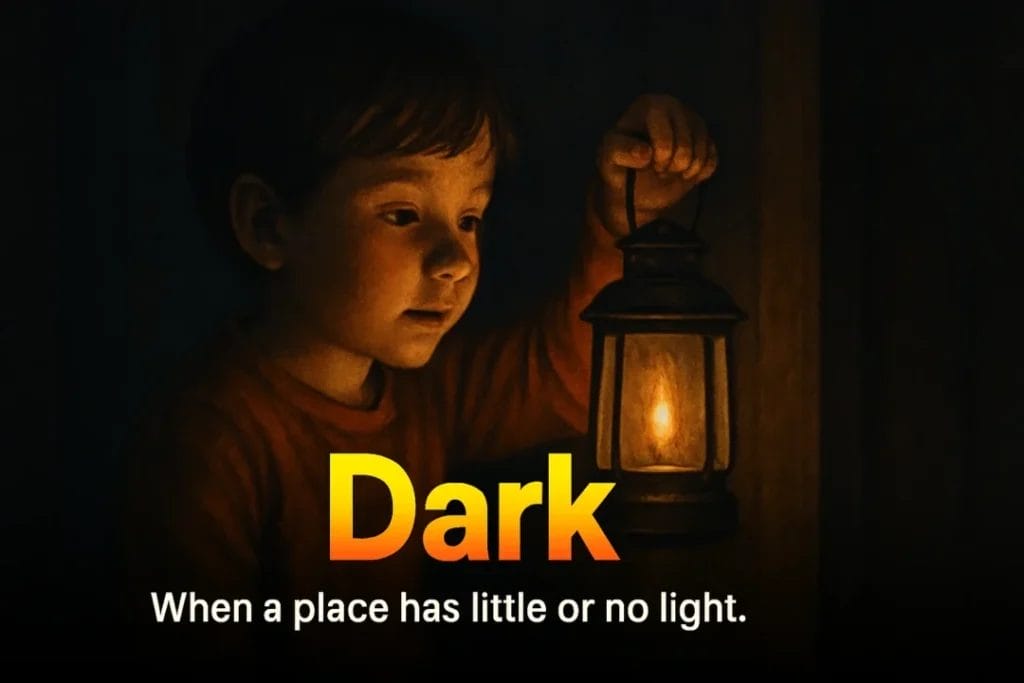
Dark Definition: When a place has little or no light.
- The room was so dark that she turned on a lamp to see her book.
- It gets dark outside after the sun sets in the evening.
- He was afraid to walk through the dark forest without a flashlight.
- Real World Use Case: 🔗 Dark on Youglish
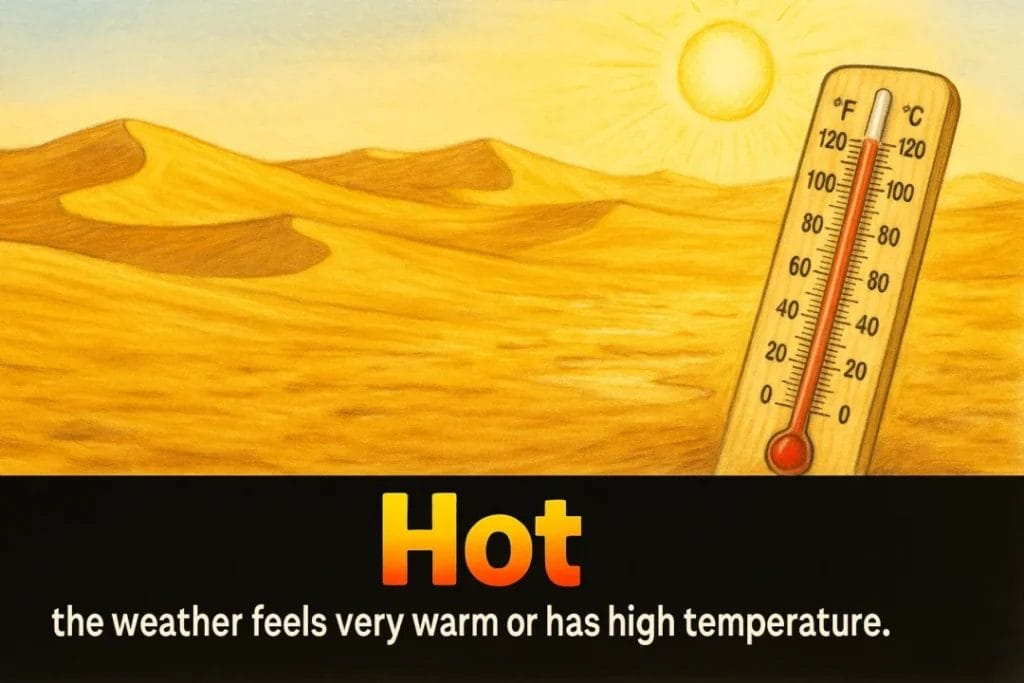
Hot Definition: The weather feels very warm or has high temperature.
- The hot summer day made us want to swim in the cool pool.
- She drank cold water because the weather was so hot outside.
- It was too hot to play outside, so we stayed in the shade.
- Real World Use Case: 🔗 Hot on Youglish
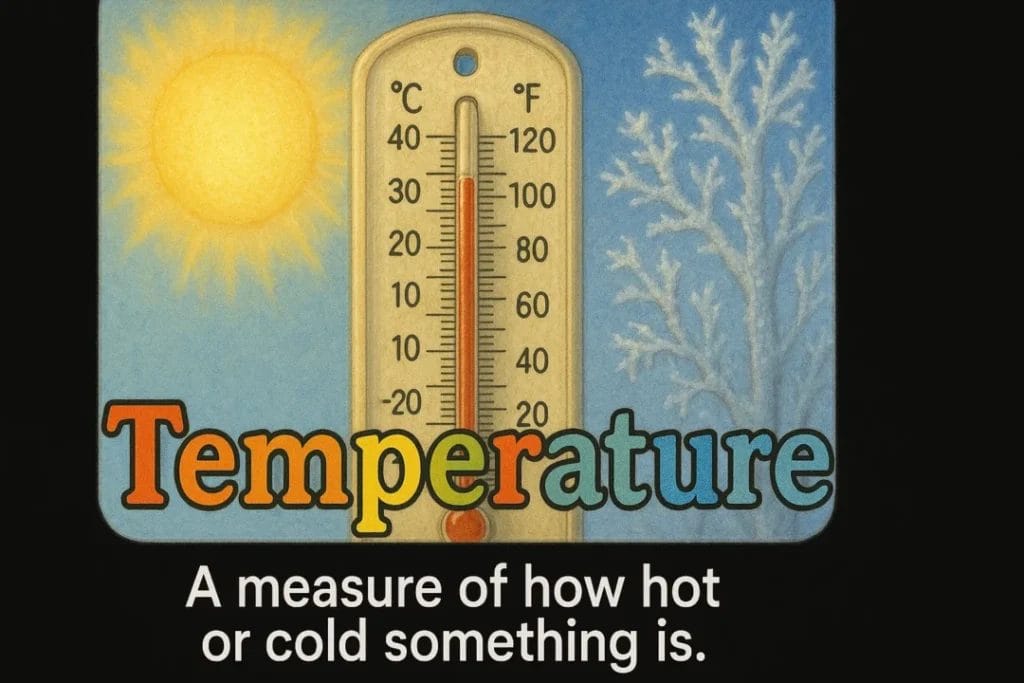
Temperature Definition: A measure of how hot or cold something is.
- The temperature was so high that we stayed in the shade.
- She checked the temperature of the soup to make sure it wasn’t too hot.
- In winter, the temperature drops, and we need warm coats.
- Real World Use Case: 🔗 Temperature on Youglish
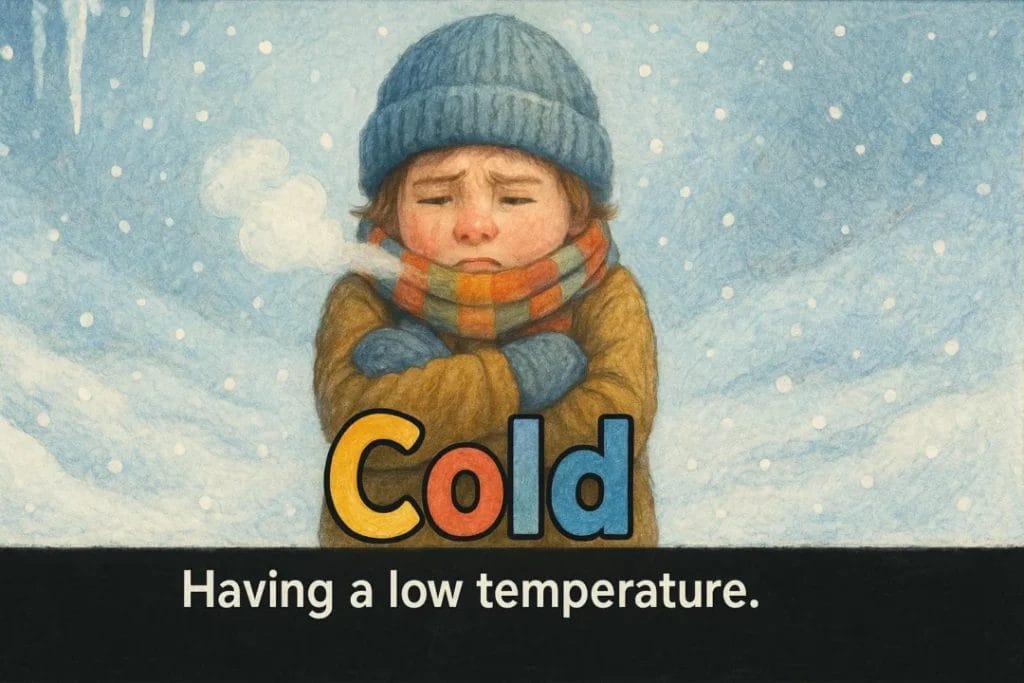
Cold Definition: Having a low temperature.
- The cold wind made her wear a scarf and gloves outside.
- The water was too cold to swim in during the early morning.
- He drank hot tea to warm up in the cold weather.
- Real World Use Case: 🔗 Cold on Youglish
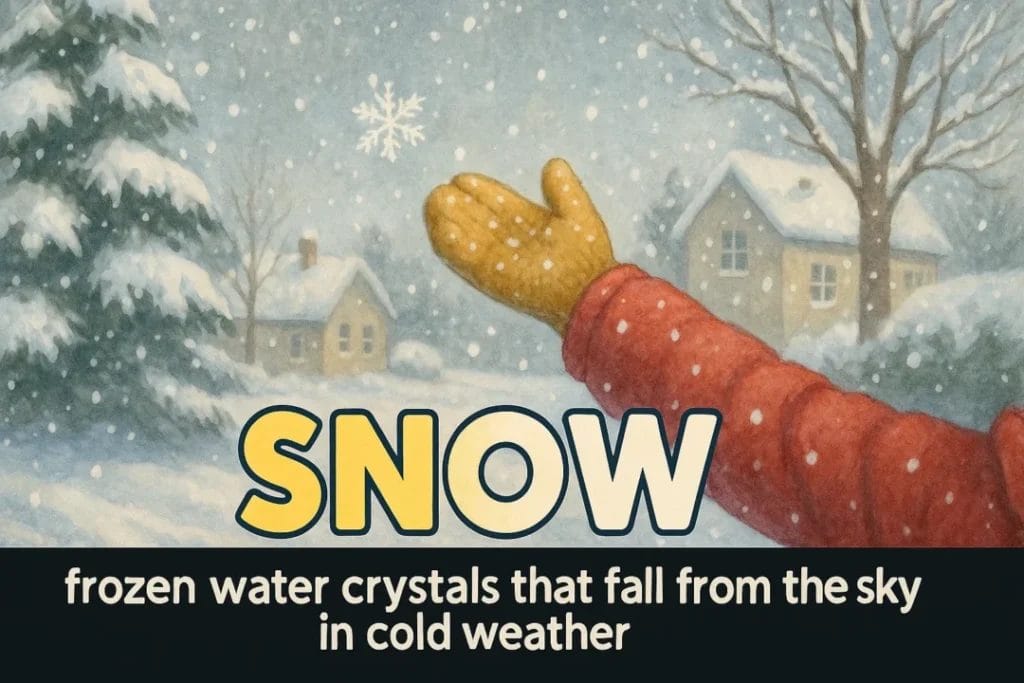
Snow Definition: Frozen water crystals that fall from the sky in cold weather.
- The snow covered the ground, so we built a snowman.
- She wore boots because the snow made the paths slippery.
- In winter, snow falls and makes the town look white and quiet.
- Real World Use Case: 🔗 Snow on Youglish
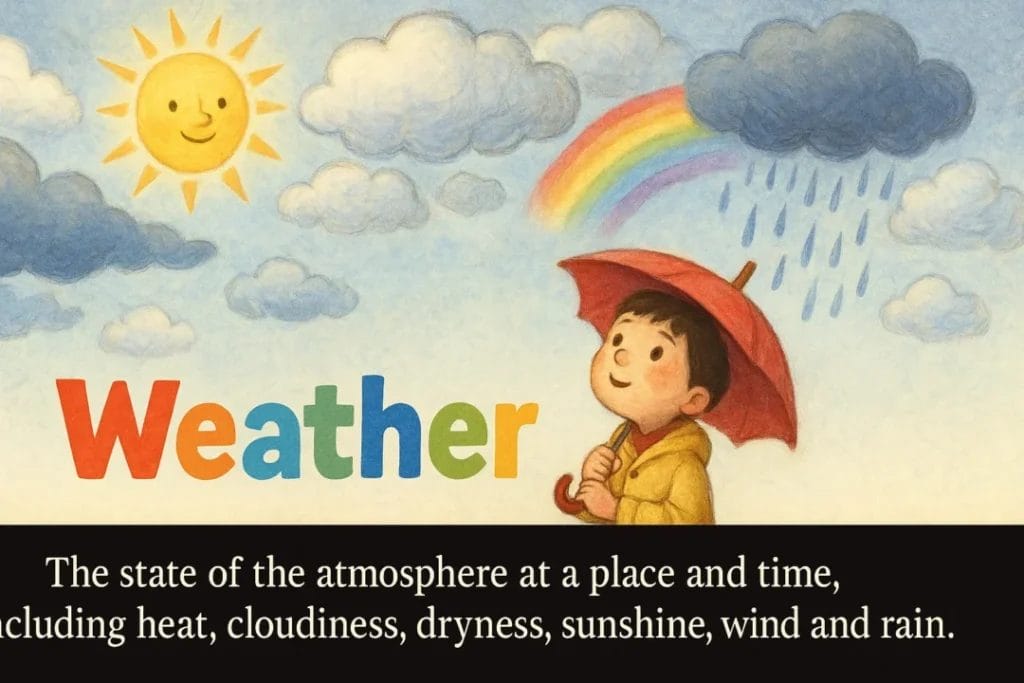
Weather Definition: The state of the atmosphere at a place and time, including heat, cloudiness, dryness, sunshine, wind, and rain.
- The weather today is sunny, so we can go to the park.
- Bad weather with rain and wind stopped the soccer game.
- She checked the weather forecast to plan her weekend trip.
- Real World Use Case: 🔗 Weather on Youglish
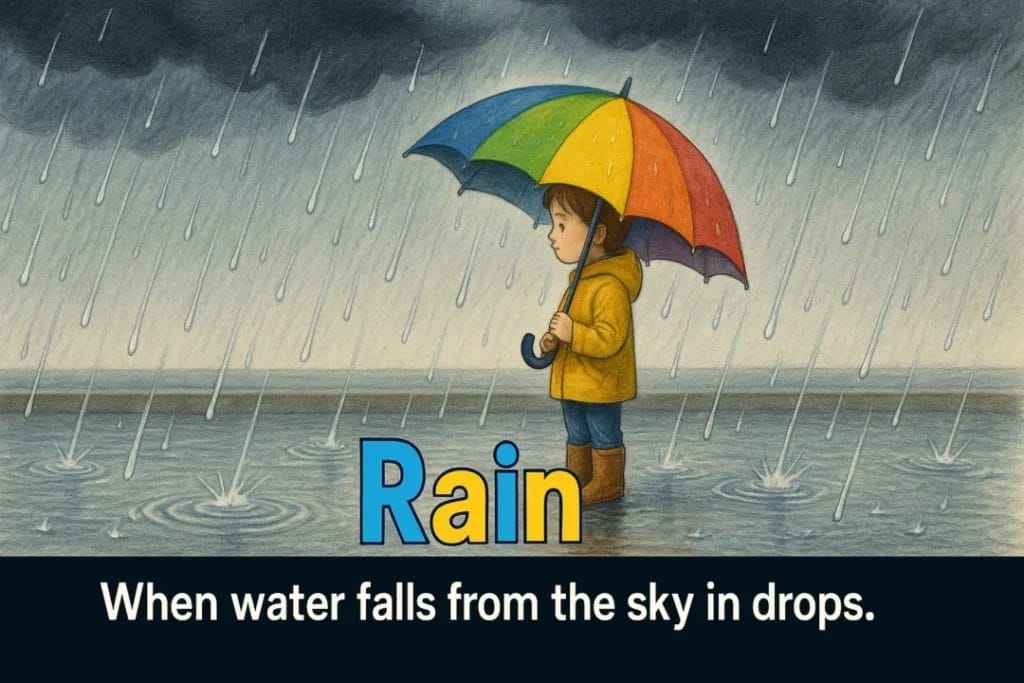
Rain Definition: When water falls from the sky in drops.
- The rain started falling, so we ran inside to stay dry.
- She loves watching the rain through the window while drinking tea.
- We canceled the picnic because the rain was too heavy to go outside.
- Real World Use Case: 🔗 Rain on Youglish
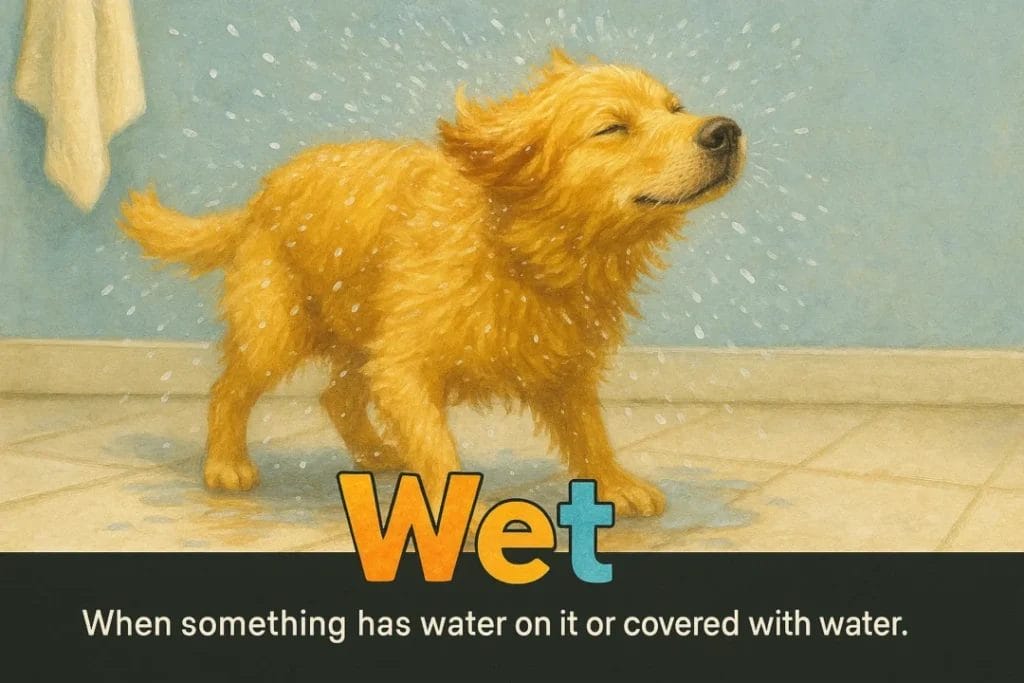
Wet Definition: When something has water on it or covered with water.
- Her shoes were wet after walking through the puddles in the rain.
- The dog was wet because it jumped into the lake to swim.
- He wiped the wet table with a cloth after spilling water on it.
- Real World Use Case: 🔗 Wet on Youglish
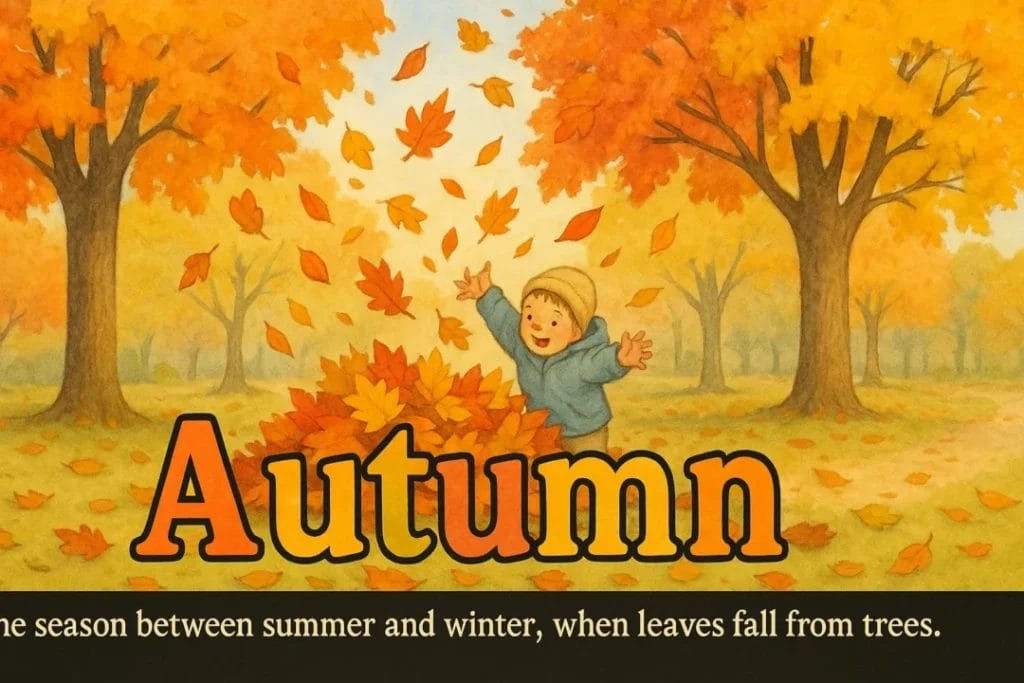
Autumn Definition: The season between summer and winter, when leaves fall from trees.
- In autumn, the trees turn red and orange before the leaves fall.
- She loves autumn because the air feels cool and fresh.
- We collected colorful leaves during autumn for an art project.
- Real World Use Case: 🔗 Autumn on Youglish
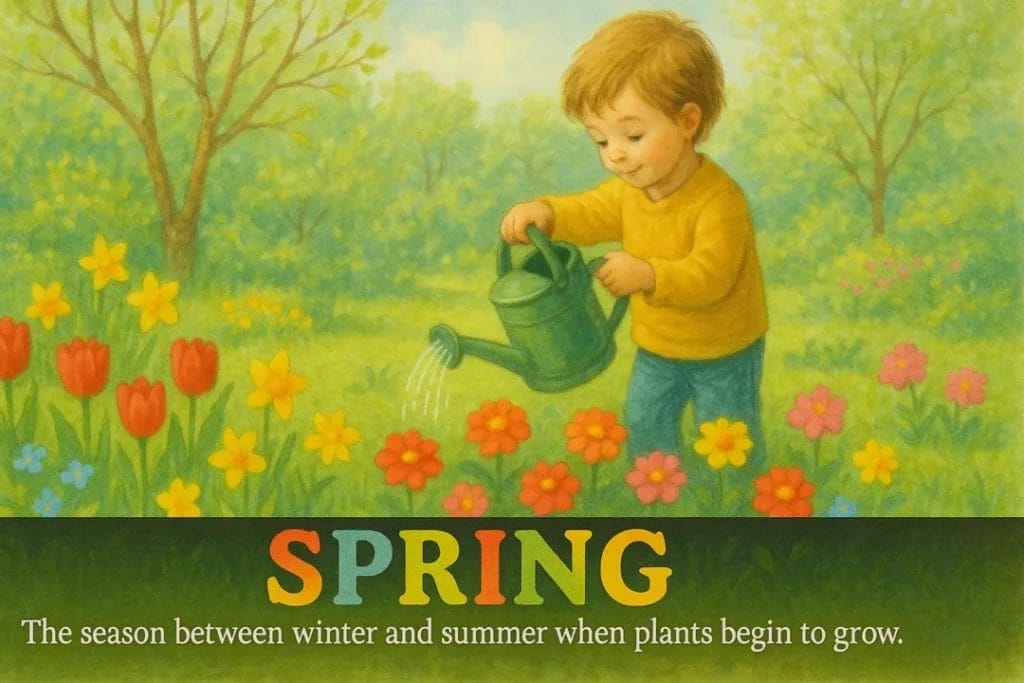
Spring Definition: The season between winter and summer when plants begin to grow.
- In spring, flowers bloom and make the garden colorful.
- We planted seeds in spring because the weather is warm.
- The spring sun helped the trees grow new green leaves.
- Real World Use Case: 🔗 Spring on Youglish
Summer Definition: The hottest season of the year, usually after spring.
- In summer, we wear shorts and go swimming because it’s so warm.
- The summer sun shines brightly, making the days long and hot.
- She loves summer because she can eat ice cream and play outside.
- Real World Use Case: 🔗 Summer on Youglish

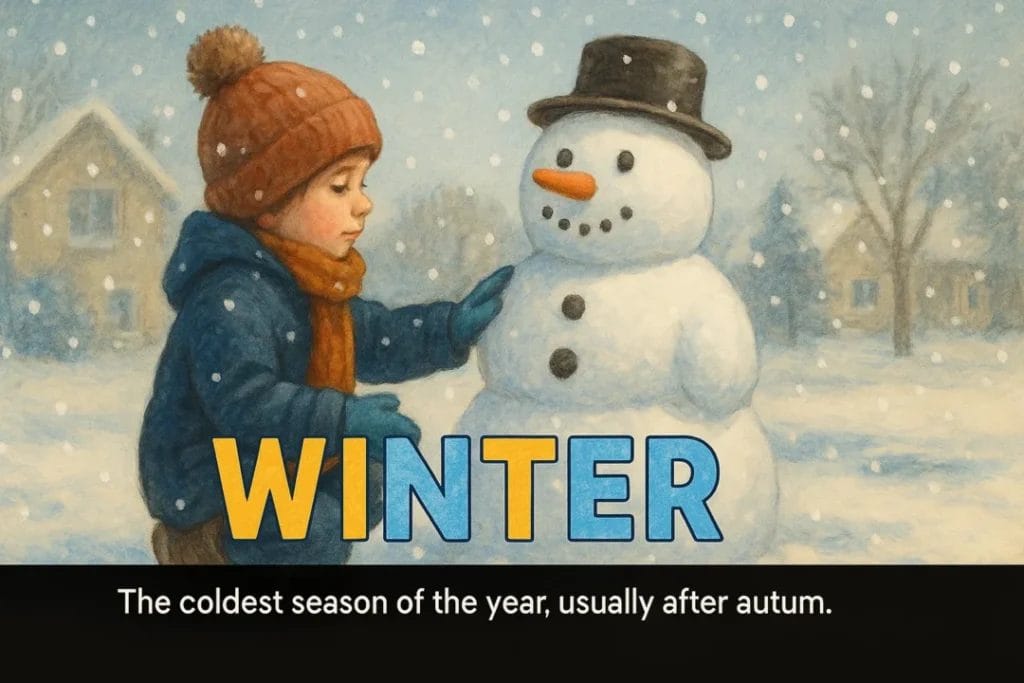
Winter Definition: The coldest season of the year, usually after autumn.
- During winter, we wear coats and scarves to stay warm in the cold.
- The winter snow covered the ground, so we built a snowman.
- He likes winter because he can go skiing on the snowy hills.
- Real World Use Case: 🔗 Winter on Youglish
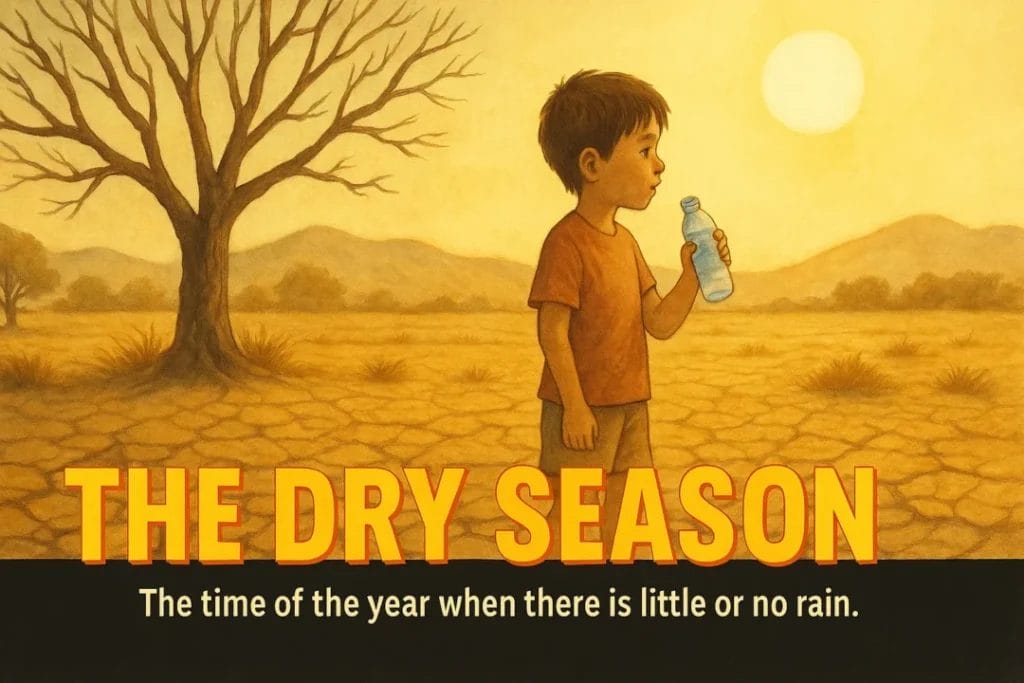
The Dry Season Definition: The time of the year when there is little or no rain.
- In the dry season, the grass turned brown because it didn’t rain.
- Farmers wait for the dry season to harvest their crops easily.
- During the dry season, the river was too low for boats to sail.
- Real World Use Case: 🔗 Dry Season on Youglish
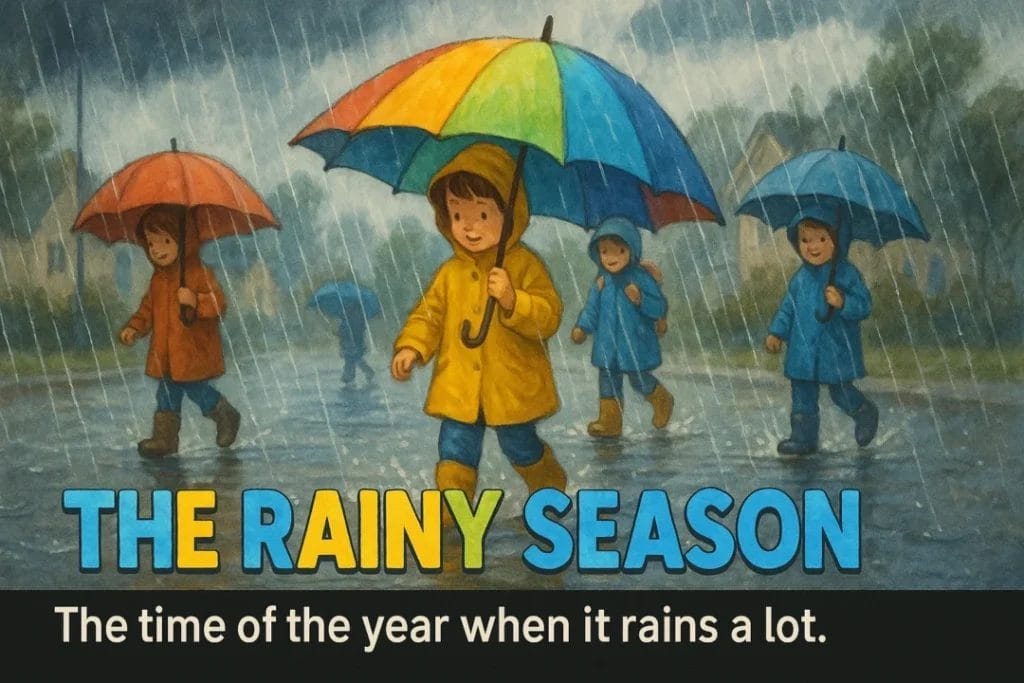
The Rainy Season Definition: The time of the year when it rains a lot.
- In the rainy season, we always carry umbrellas to stay dry.
- The fields are green during the rainy season because of all the water.
- She stays inside during the rainy season to avoid getting wet.
- Real World Use Case: 🔗 Rainy Season on Youglish
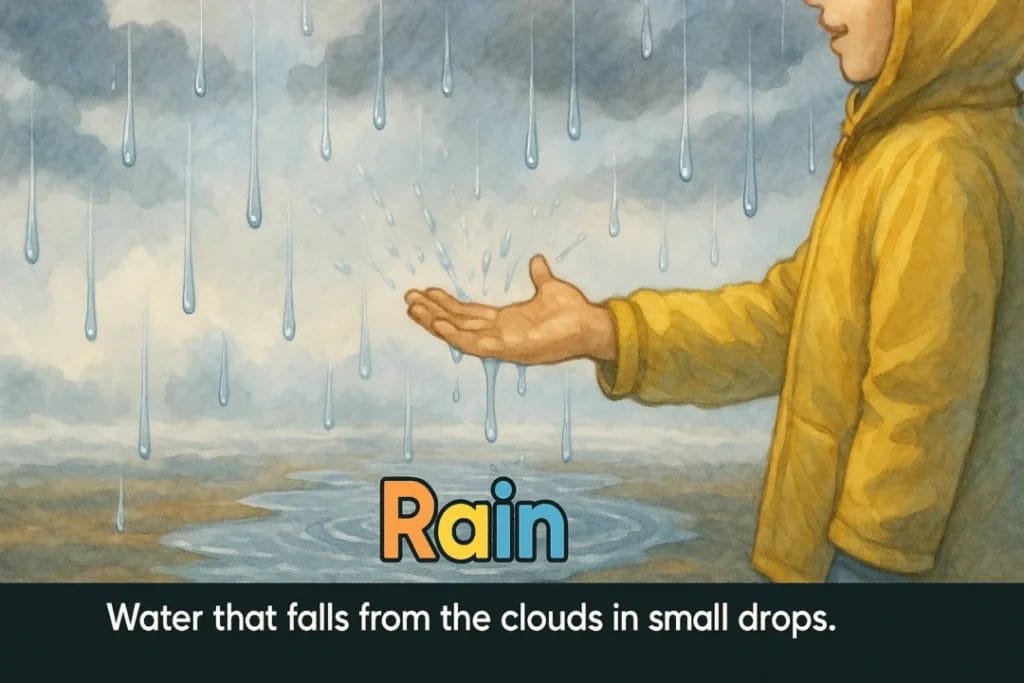
Rain Definition: Water that falls from the clouds in small drops.
- The rain fell all day, so we played board games inside.
- She wore a raincoat because the rain was heavy on her walk.
- The garden grew well after the rain watered all the plants.
- Real World Use Case: 🔗 Rain on Youglish
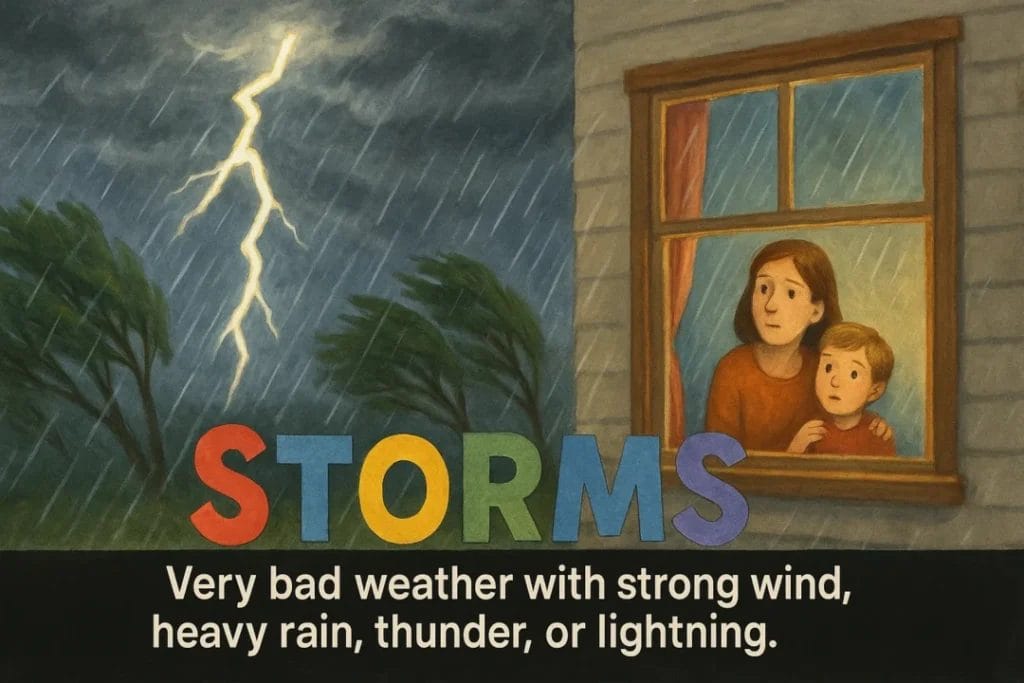
Storms Definition: Very bad weather with strong wind, heavy rain, thunder, or lightning.
- The storms last night had loud thunder that woke everyone up.
- We stayed inside during the storms because the wind was so strong.
- The storms brought heavy rain and lightning to the village.
- Real World Use Case: 🔗 Storms on Youglish
Snow Definition: Soft, white pieces of frozen water that fall from the sky in cold weather.
- The snow covered the roads, so we stayed home and drank hot cocoa.
- She loves snow because she can make snowballs and play outside.
- During winter, snow falls and makes the mountains look white.
- Real World Use Case: 🔗 Snow on Youglish
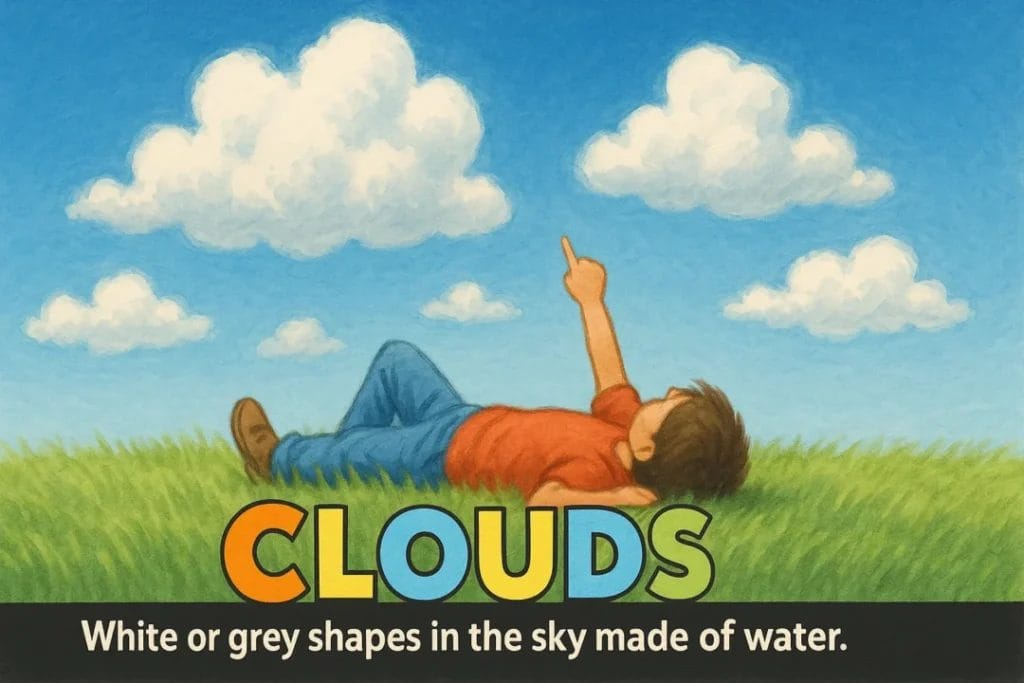
Clouds Definition: White or grey shapes in the sky made of water.
- The clouds were so thick that we couldn’t see the sun today.
- She saw funny shapes in the clouds, like a rabbit and a heart.
- The clouds turned grey, and soon it started to rain.
- Real World Use Case: 🔗 Clouds on Youglish
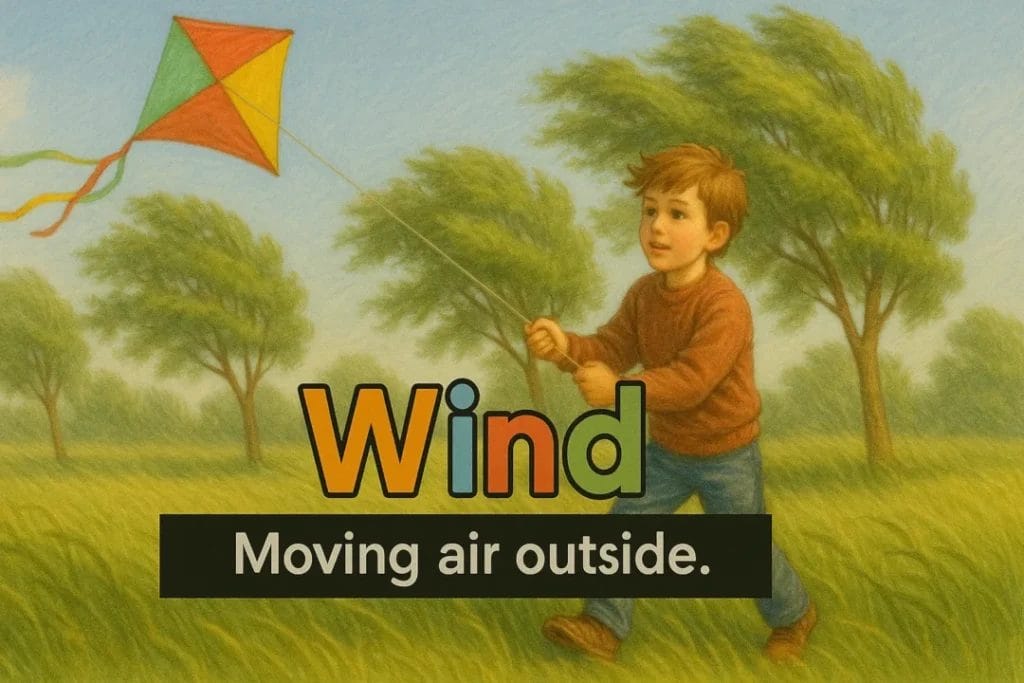
Wind Definition: Moving air outside.
- The wind blew so hard that it knocked over the garden chairs.
- She flew a kite because the wind was strong in the park.
- The wind felt cool on his face during the hot summer day.
- Real World Use Case: 🔗 Wind on Youglish
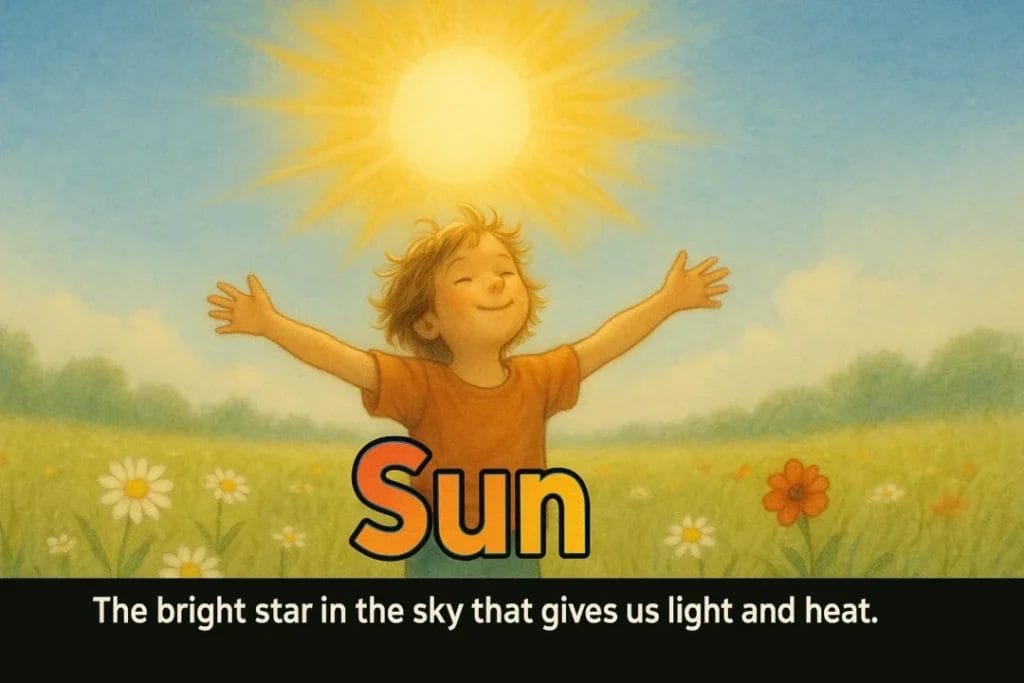
Sun Definition: The bright star in the sky that gives us light and heat.
- The sun was so bright that we wore sunglasses at the beach.
- Plants grow well when the sun shines warmly every day.
- She sat outside to feel the sun’s heat on her face.
- Real World Use Case: 🔗 Sun on Youglish
Interactive Activities
Complete Vocabulary Practice with 22 Essential Climate & Weather Words
Activity 1: Multiple Choice Quiz
Choose the correct answer for each question.
Vocabulary Activities
Here are some engaging vocabulary activities related to the words mentioned above. These activities will reinforce the vocabulary you’ve just taught your students.
Matching – Vocabulary Quiz
In this activity, the students will match the words with their respective definitions.
Word Search – Find the hidden words in a letter Grid
In this activity, the students will search for the words that the teacher has taught. The words are hidden in a letter grid.
Spin the Wheel – Find the word
In this game, the teacher will spin a wheel, and eventually, it will stop. When the wheel stops, the students will see the meaning of a specific word. Then, the teacher will ask one of the students to guess the word by carefully reading its definition. The teacher may ask the student to make a sentence for the word.
Unscramble the word or phrase – Vocabulary Quiz
In this activity, the students will move the letters around to put them in the right order and reveal a word or phrase. All these words are connected to the above vocabulary.
Open the box
In this fun activity, the teacher will choose one of the students to participate. First, that student will pick a number. Then, the teacher will click on the chosen number. What happens next? Well, the student will see the meaning of a word—a word related to the vocabulary the teacher has taught in class. Now comes the exciting part: the student needs to read the meaning and guess the word! If the guess is correct, the teacher might even ask the student to create a sentence using that word.