
Unlock 1 -Unit 2 – Seasons – RW – Vocabulary 2

The vocabulary introduced here is from the “Unlock 1” Reading and Writing book. Specifically, it comes from the second unit (Seasons) and it is the second vocabulary set.
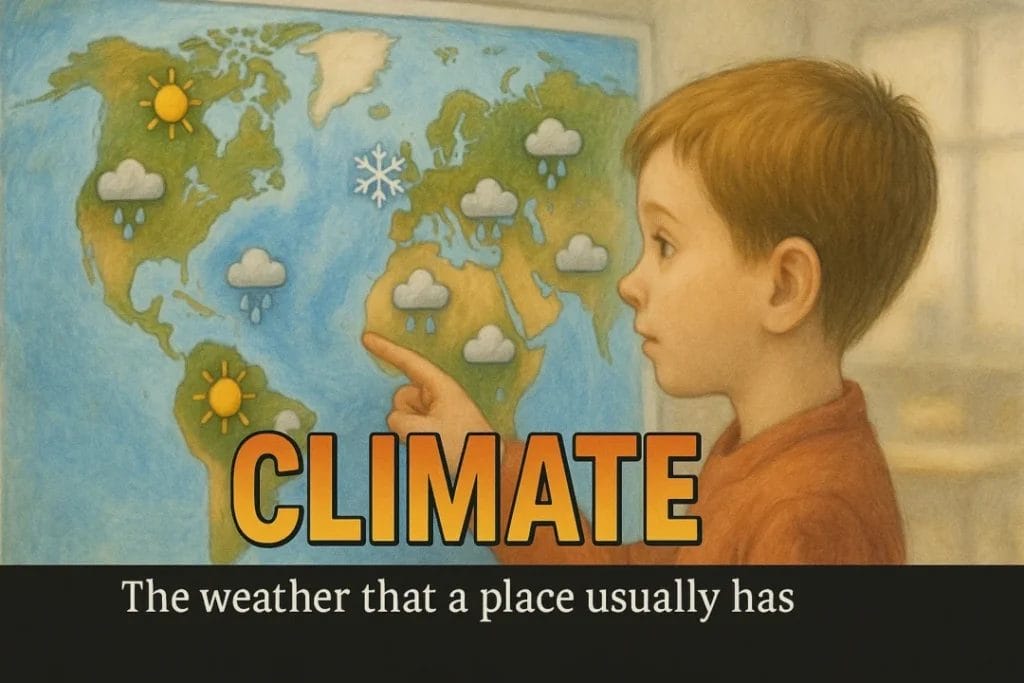
Climate Definition: The weather that a place usually has.
- The climate in this country is hot and sunny most of the year.
- She moved to a place with a cold climate where it snows a lot.
- The climate near the sea is wetter than in the mountains.
- Real World Use Case: 🔗 Climate on Youglish
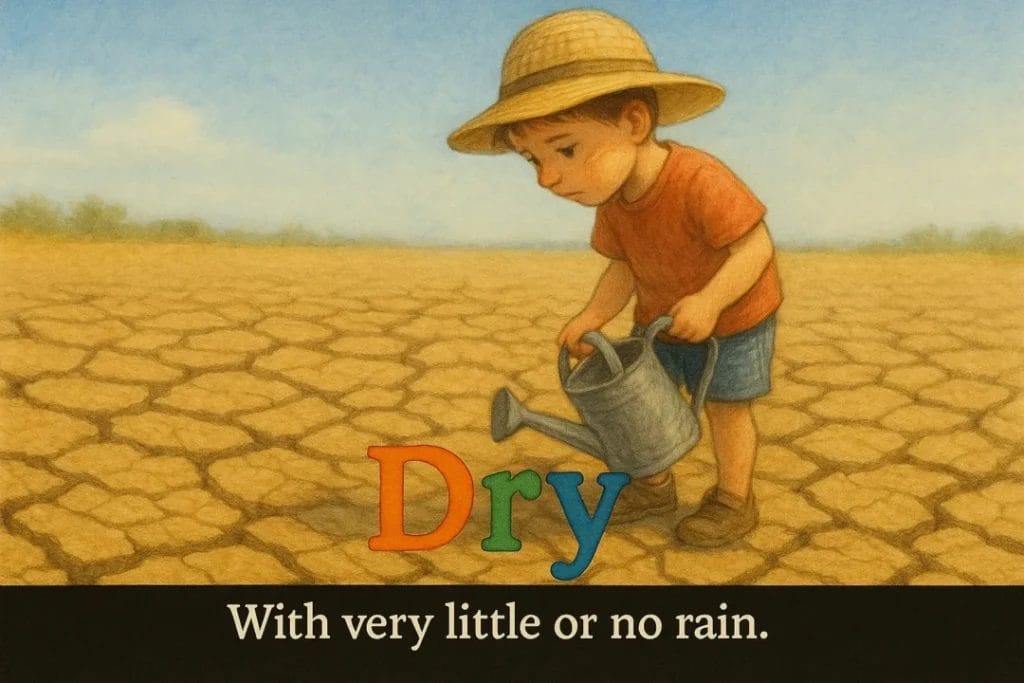
Dry Definition: With very little or no rain.
- The desert is so dry that plants hardly grow there without water.
- During the dry season, the river became very small and almost disappeared.
- Her clothes stayed dry because she used an umbrella in the light rain.
- Real World Use Case: 🔗 Dry on Youglish
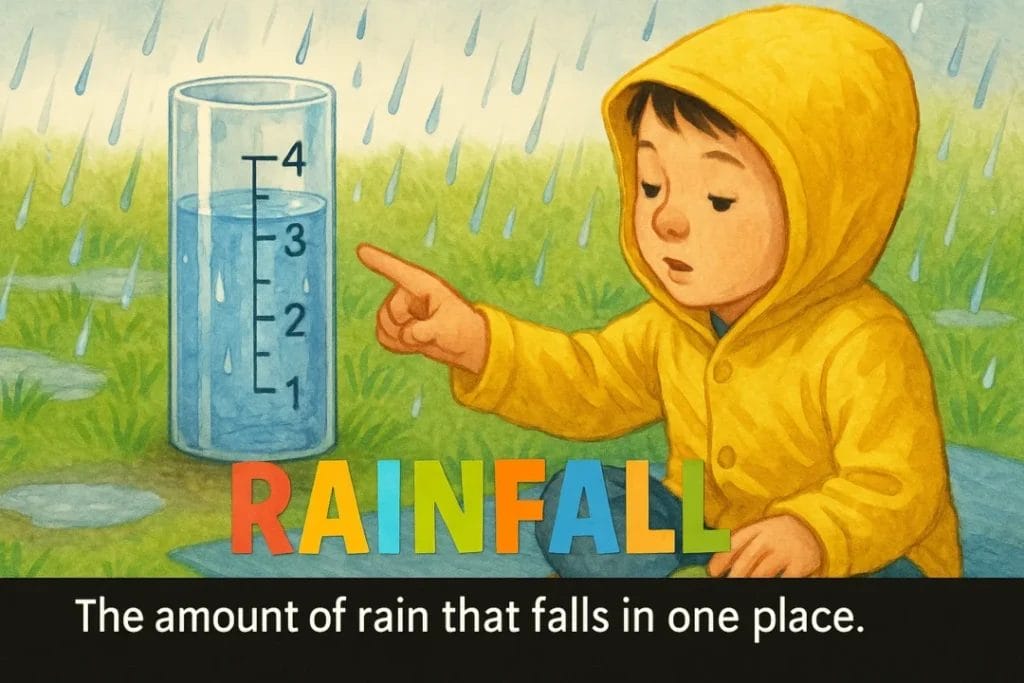
Rainfall Definition: The amount of rain that falls in one place.
- The rainfall was heavy this month, so the fields were full of water.
- The weather report said the rainfall in the city was low this year.
- Farmers were happy because the rainfall helped their crops grow well.
- Real World Use Case: 🔗 Rainfall on Youglish
Cloudy Definition: Covered with clouds.
- The sky was cloudy, so we couldn’t see the stars tonight.
- On cloudy days, she likes to stay inside and read a book.
- It was cloudy all morning, but the sun came out in the afternoon.
- Real World Use Case: 🔗 Cloudy on Youglish

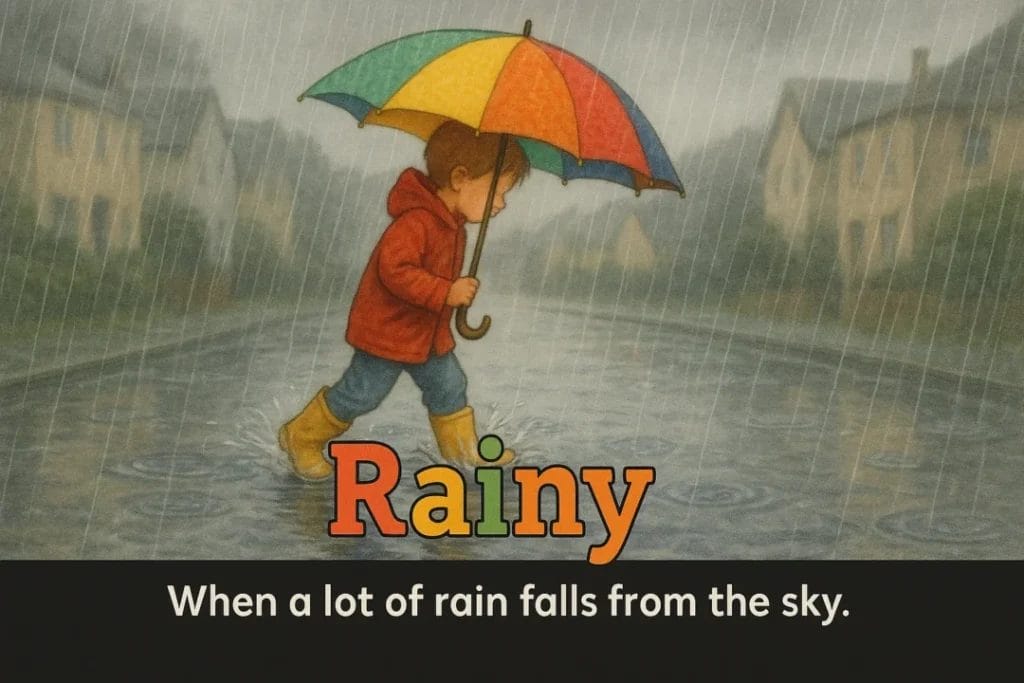
Rainy Definition: When a lot of rain falls from the sky.
- We stayed home on the rainy day and played board games.
- The rainy weather made the streets wet and slippery.
- She wore boots because it was rainy and the ground was muddy.
- Real World Use Case: 🔗 Rainy on Youglish
Sunny Definition: Having a lot of bright sunlight.
- It was a sunny day, so we went to the park to play.
- She loves sunny weather because it makes her feel happy and warm.
- The sunny beach was perfect for swimming and building sandcastles.
- Real World Use Case: 🔗 Sunny on Youglish

Windy Definition: With a lot of wind.
- It was so windy that our hats flew off while walking outside.
- The windy weather made the trees sway and the leaves fall.
- She didn’t ride her bike because it was too windy and hard to balance.
- Real World Use Case: 🔗 Windy on Youglish

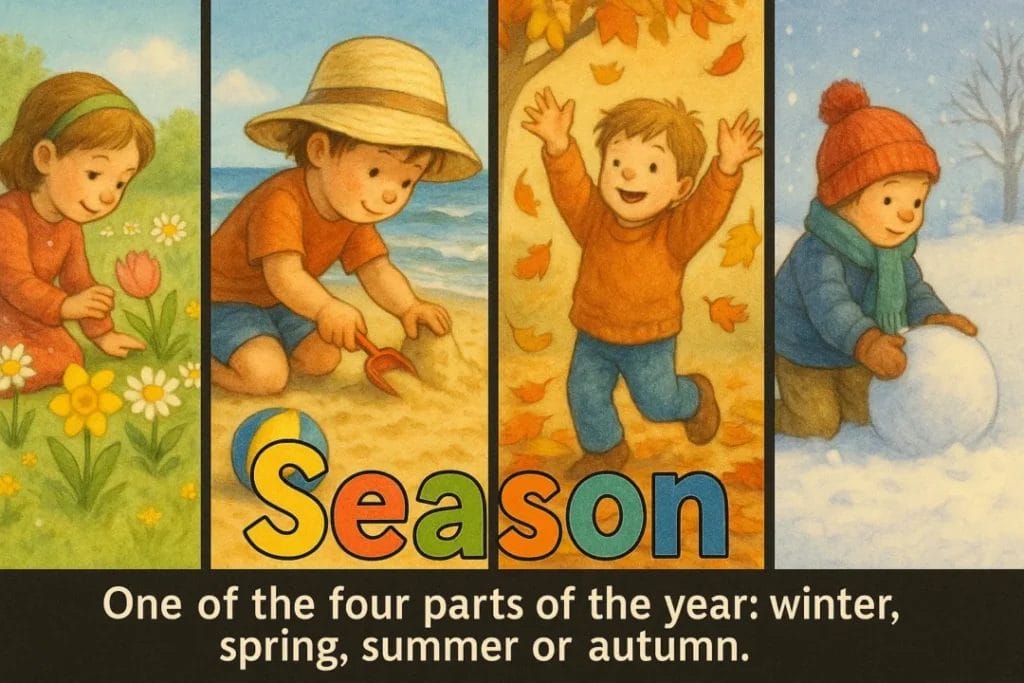
Season Definition: One of the four parts of the year: winter, spring, summer or autumn.
- My favorite season is spring because the flowers bloom and it’s warm.
- In the rainy season, we always carry umbrellas to stay dry.
- Each season brings different weather, like snow in winter or heat in summer.
- Real World Use Case: 🔗 Season on Youglish
Interactive Weather Activities
Complete Vocabulary Practice with 8 Weather Words
Activity 1: Multiple Choice Quiz
Choose the correct answer for each question.
Vocabulary Activities
Here are some engaging vocabulary activities related to the words mentioned above. These activities will reinforce the vocabulary you’ve just taught your students.
Matching – Vocabulary Quiz
In this activity, the students will match the words with their respective definitions.
Word Search – Find the hidden words in a letter Grid
In this activity, the students will search for the words that the teacher has taught. The words are hidden in a letter grid.
Spin the Wheel – Find the word
In this game, the teacher will spin a wheel, and eventually, it will stop. When the wheel stops, the students will see the meaning of a specific word. Then, the teacher will ask one of the students to guess the word by carefully reading its definition. The teacher may ask the student to make a sentence for the word.
Unscramble the word or phrase – Vocabulary Quiz
In this activity, the students will move the letters around to put them in the right order and reveal a word or phrase. All these words are connected to the above vocabulary.
Open the box
In this fun activity, the teacher will choose one of the students to participate. First, that student will pick a number. Then, the teacher will click on the chosen number. What happens next? Well, the student will see the meaning of a word—a word related to the vocabulary the teacher has taught in class. Now comes the exciting part: the student needs to read the meaning and guess the word! If the guess is correct, the teacher might even ask the student to create a sentence using that word.