
Unlock 1 -Unit 3 – Lifestyle – RW – Vocabulary 2

The vocabulary introduced here is from the “Unlock 1” Reading and Writing book. Specifically, it comes from the third unit (Lifestyle) and it is the second vocabulary set.
Afternoon Definition: The time between noon and evening.
- We played soccer in the afternoon after lunch when the sun was still up.
- She studies in the afternoon because she feels more awake after noon.
- The afternoon was warm, so we went for a walk in the park.
- Real World Use Case: 🔗 Afternoon on Youglish

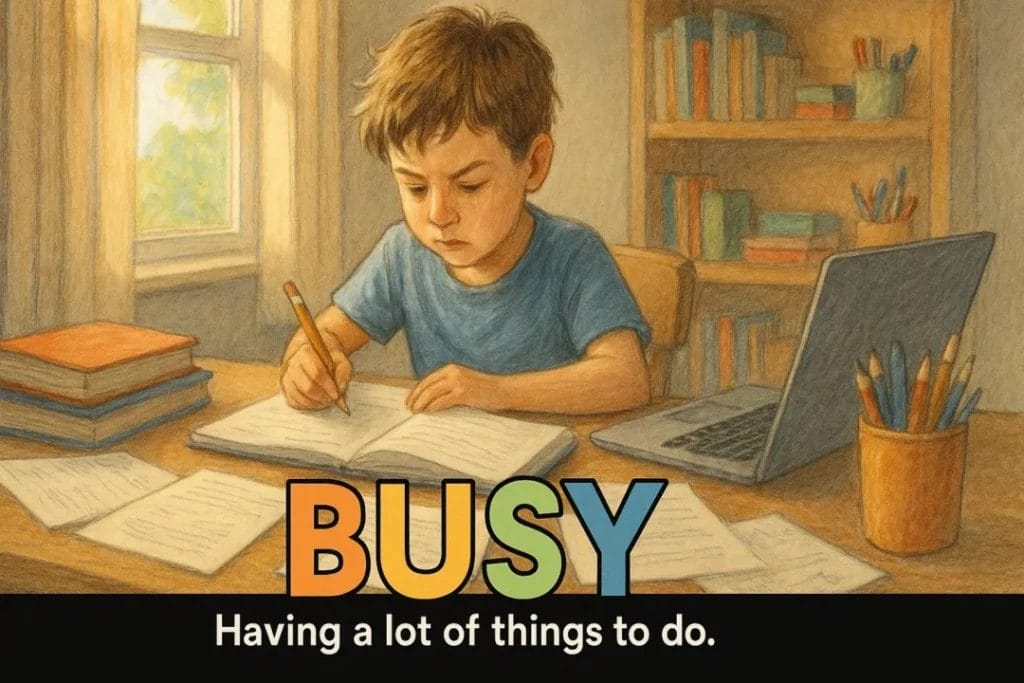
Busy Definition: Having a lot of things to do.
- He was so busy with homework that he didn’t have time to play.
- The shop is always busy in the morning with people buying coffee.
- She felt busy all day, running from school to dance class.
- Real World Use Case: 🔗 Busy on Youglish
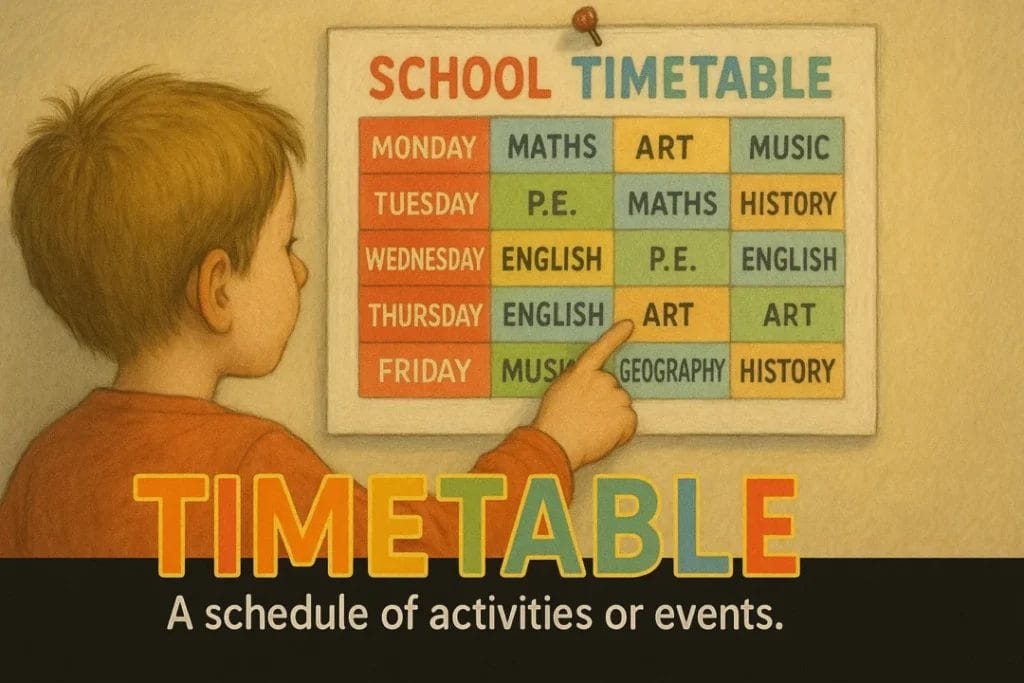
Timetable Definition: A schedule of activities or events.
- The school timetable shows that we have math class at 10 a.m.
- She checked the bus timetable to know when to catch the next ride.
- His timetable was full of activities, like sports and music lessons.
- Real World Use Case: 🔗 Timetable on Youglish
Morning Definition: The early part of the day, from dawn until noon.
- I eat breakfast every morning before going to school.
- The morning was cool, so we wore jackets for our walk.
- She likes to read in the morning when the house is quiet.
- Real World Use Case: 🔗 Morning on Youglish

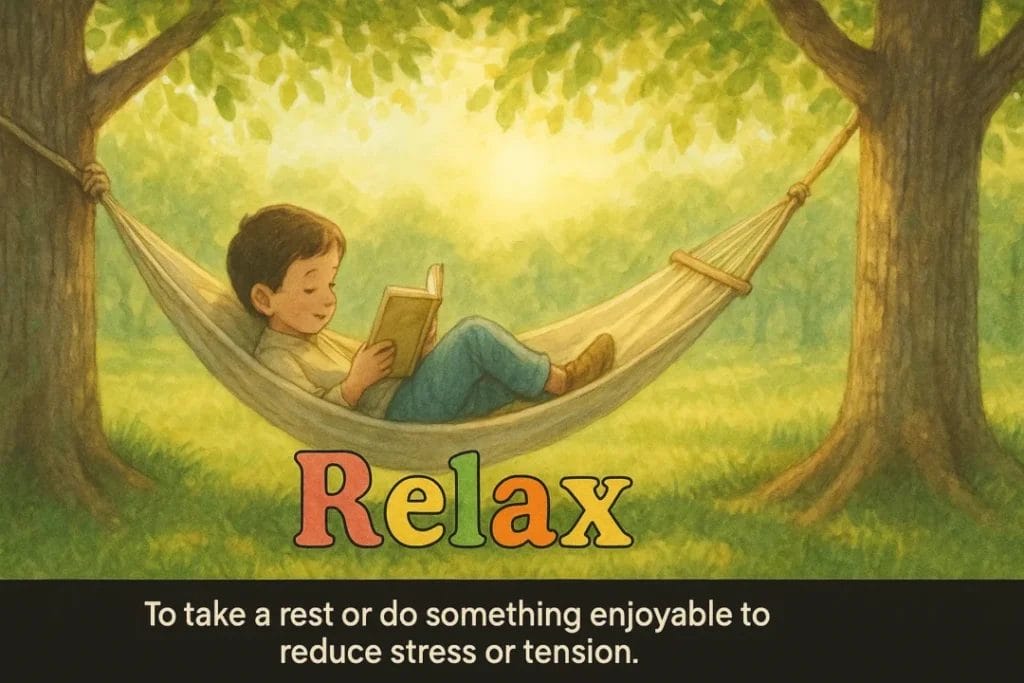
Relax Definition: To take a rest or do something enjoyable to reduce stress or tension.
- After a long day, he likes to relax by watching a fun movie.
- She went to the park to relax and enjoy the sunny weather.
- Listening to music helps me relax when I feel stressed.
- Real World Use Case: 🔗 Relax on Youglish
Evening Definition: The time between afternoon and bedtime.
- We watch TV together in the evening after dinner.
- The evening was cold, so she stayed inside with a warm blanket.
- He goes for a walk in the evening when the stars come out.
- Real World Use Case: 🔗 Evening on Youglish

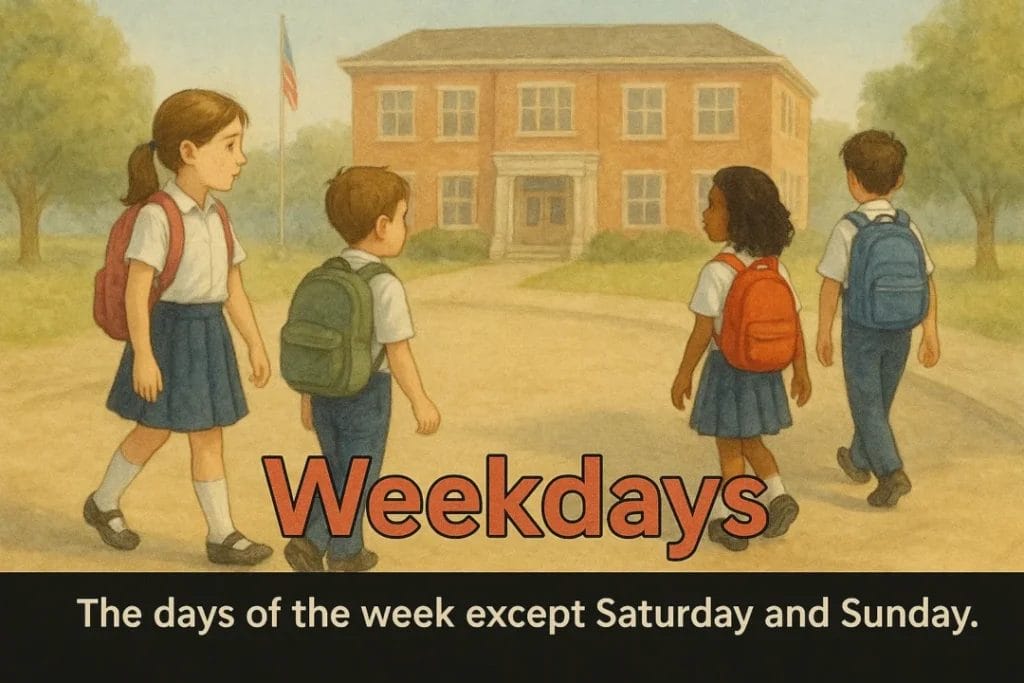
Weekdays Definition: The days of the week except Saturday and Sunday.
- She goes to school on weekdays and studies from morning to afternoon.
- The store is open late on weekdays to help busy workers shop.
- On weekdays, he wakes up early to get ready for his job.
- Real World Use Case: 🔗 Weekdays on Youglish
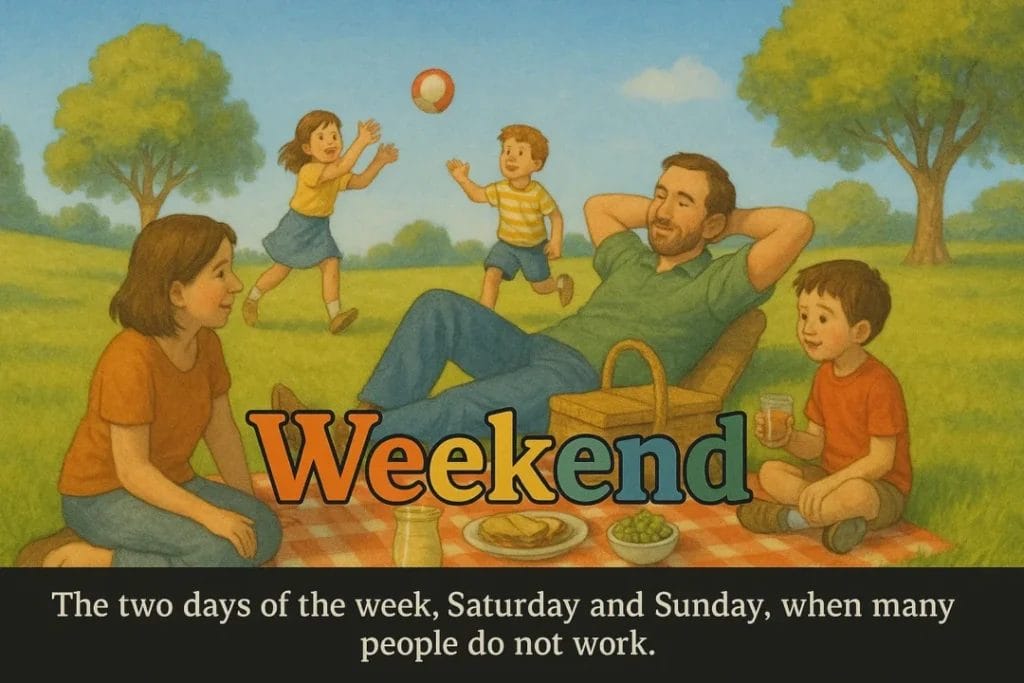
Weekend Definition: The two days of the week, Saturday and Sunday, when many people do not work.
- I play with my friends all day during the weekend because there’s no school.
- She visits her grandparents every weekend to spend time with them.
- The weekend is perfect for relaxing and going to the park.
- Real World Use Case: 🔗 Weekend on Youglish
Interactive Activities
Complete Vocabulary Practice with 8 Time & Schedule Words
Activity 1: Multiple Choice Quiz
Choose the correct answer for each question.
Vocabulary Activities
Here are some engaging vocabulary activities related to the words mentioned above. These activities will reinforce the vocabulary you’ve just taught your students.
Matching – Vocabulary Quiz
In this activity, the students will match the words with their respective definitions.
Word Search – Find the hidden words in a letter Grid
In this activity, the students will search for the words that the teacher has taught. The words are hidden in a letter grid.
Spin the Wheel – Find the word
In this game, the teacher will spin a wheel, and eventually, it will stop. When the wheel stops, the students will see the meaning of a specific word. Then, the teacher will ask one of the students to guess the word by carefully reading its definition. The teacher may ask the student to make a sentence for the word.
Unscramble the word or phrase – Vocabulary Quiz
In this activity, the students will move the letters around to put them in the right order and reveal a word or phrase. All these words are connected to the above vocabulary.
Open the box
In this fun activity, the teacher will choose one of the students to participate. First, that student will pick a number. Then, the teacher will click on the chosen number. What happens next? Well, the student will see the meaning of a word—a word related to the vocabulary the teacher has taught in class. Now comes the exciting part: the student needs to read the meaning and guess the word! If the guess is correct, the teacher might even ask the student to create a sentence using that word.


