
Unlock 1 -Unit 4 – Places – LS – Vocabulary 1

The vocabulary introduced here is from the “Unlock 1”, Listening and Speaking book. Specifically, it comes from the fourth unit (Places) and it is the first vocabulary set.
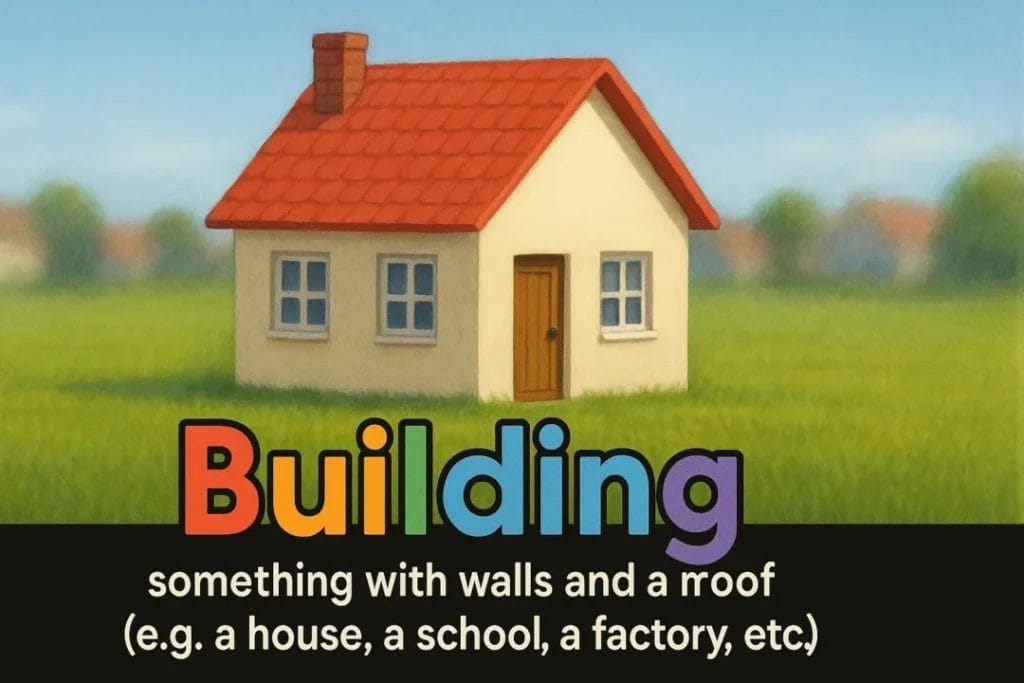
Building Definition: Something with walls and a roof (e.g. a house, a school, a factory, etc.).
- The new building in town is a tall school with many classrooms.
- She lives in a small building with a red roof and white walls.
- The building where they make cars is called a factory.
- Real World Use Case: 🔗 Building on Youglish
Dirty Definition: Not clean.
- His shoes were dirty after walking through the muddy park.
- The dirty dishes in the sink needed to be washed after dinner.
- She cleaned the dirty windows to let more sunlight into the room.
- Real World Use Case: 🔗 Dirty on Youglish

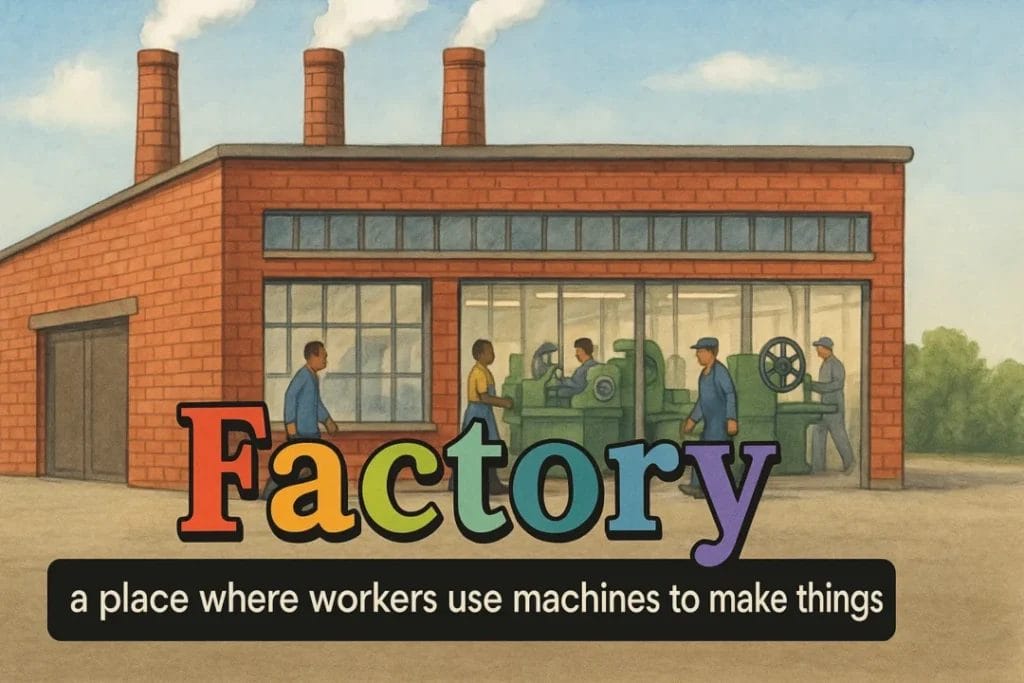
Factory Definition: A place where workers use machines to make things.
- The factory makes toys that are sold in shops all over the world.
- He works in a factory where they build cars every day.
- The factory was noisy because of all the machines running inside.
- Real World Use Case: 🔗 Factory on Youglish
Free Definition: When you don’t need to pay any money for something.
- The museum is free on Sundays, so we visited without paying.
- She got a free ice cream because it was her birthday.
- The park has a free playground where kids can play all day.
- Real World Use Case: 🔗 Free on Youglish

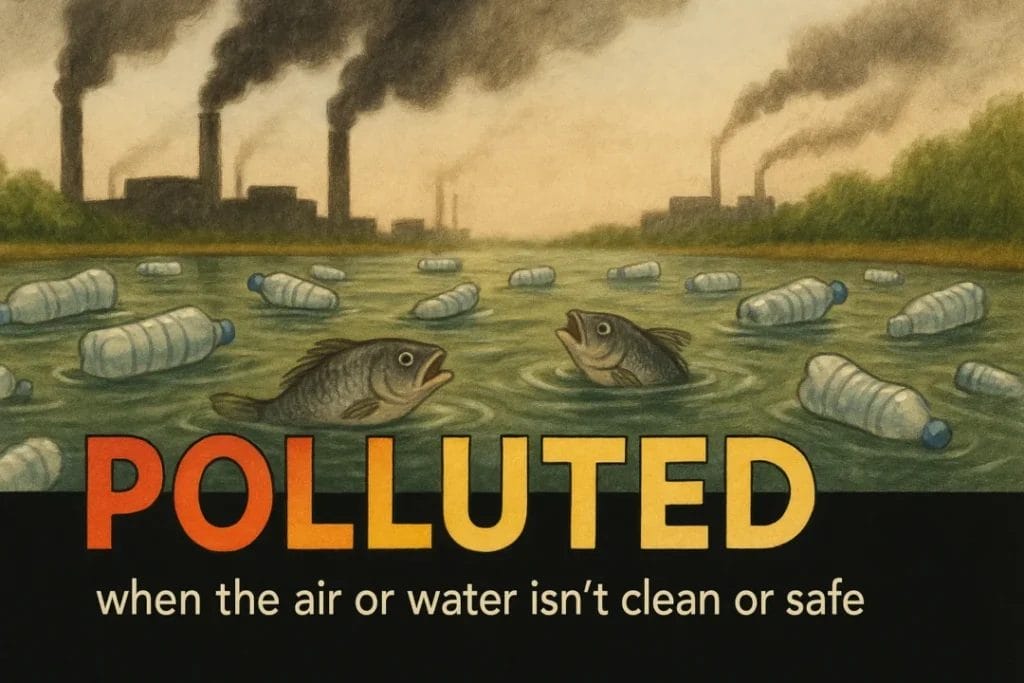
Polluted Definition: When the air or water isn’t clean or safe.
- The river was polluted because of waste from the nearby factory.
- They couldn’t breathe easily because the air in the city was polluted.
- The beach was closed because the water was polluted and unsafe for swimming.
- Real World Use Case: 🔗 Polluted on Youglish
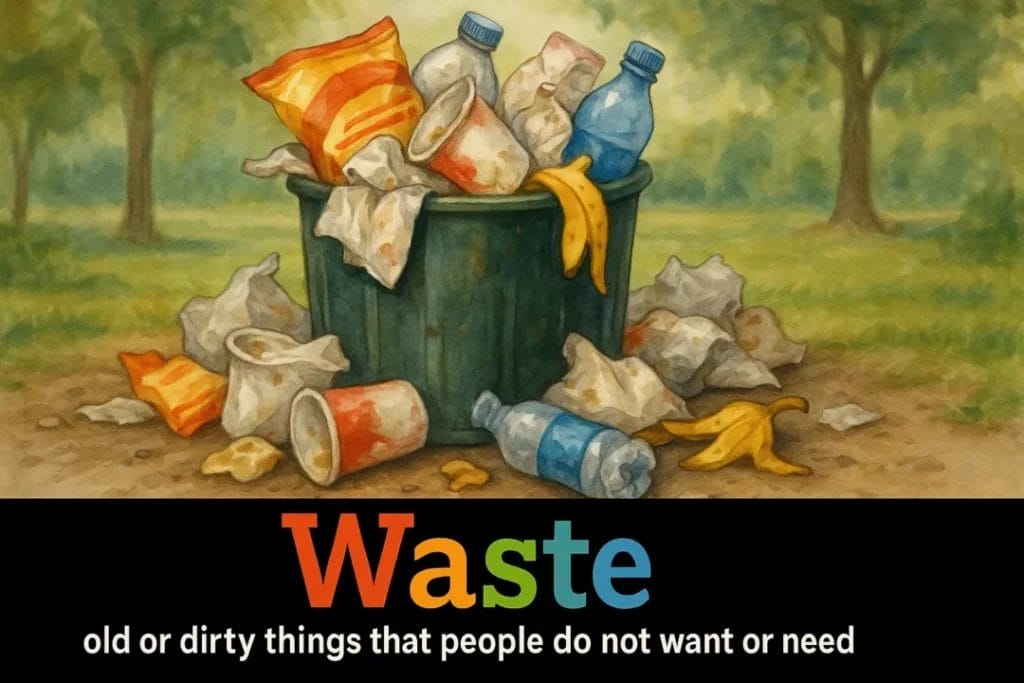
Waste Definition: Old or dirty things that people do not want or need.
- They threw the waste from the picnic into the recycling bin.
- The waste from the factory made the nearby lake dirty.
- She sorted the waste to separate paper, plastic, and food scraps.
- Real World Use Case: 🔗 Waste on Youglish
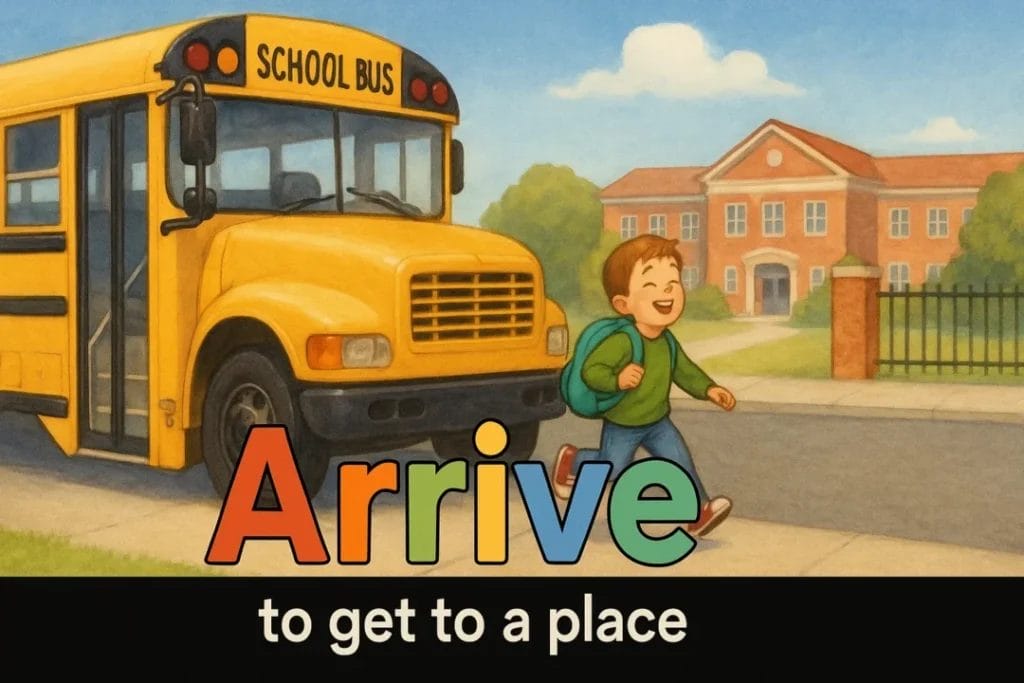
Arrive Definition: To get to a place.
- We will arrive at the train station before noon if we leave now.
- She was happy to arrive at her friend’s house after a long trip.
- The bus arrived late because of heavy traffic in the city.
- Real World Use Case: 🔗 Arrive on Youglish
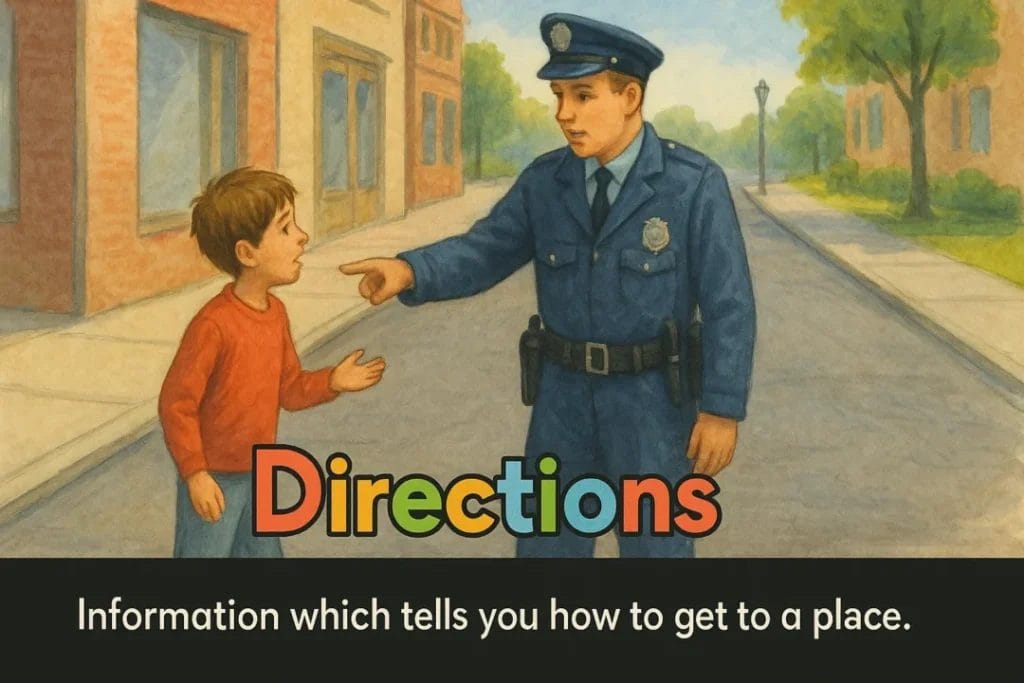
Directions Definition: Information which tells you how to get to a place.
- He asked for directions to the park because he was lost.
- The map gave clear directions to find the nearest shop.
- She wrote down the directions so she wouldn’t forget how to get to the museum.
- Real World Use Case: 🔗 Directions on Youglish
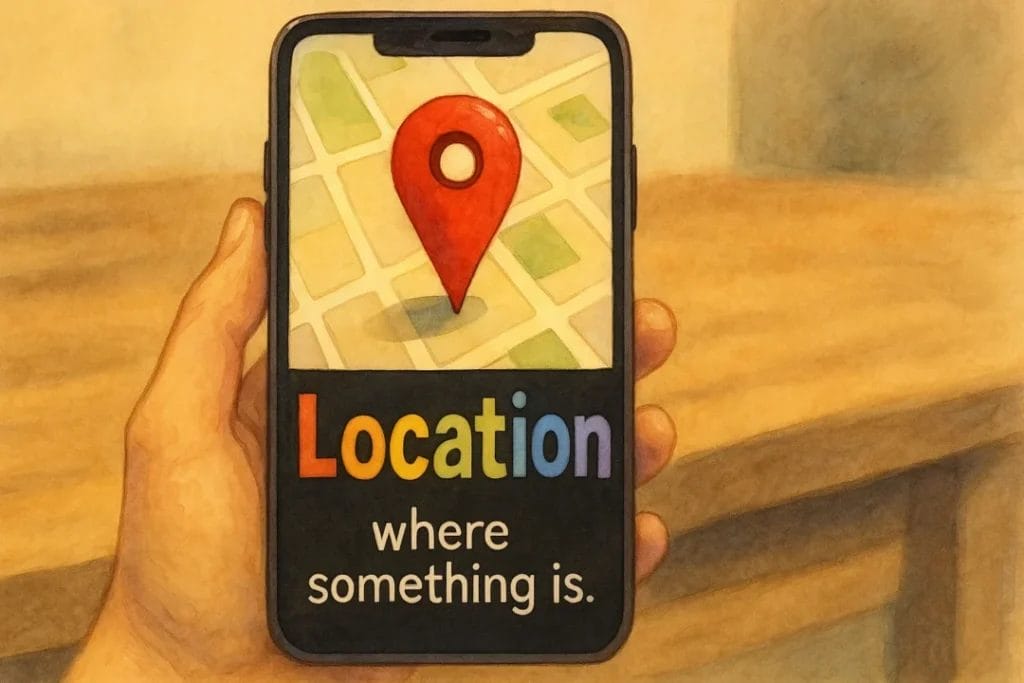
Location Definition: Where something is.
- The location of the new café is near the park.
- She chose a quiet location by the lake for her picnic.
- The location of the school is easy to find on the map.
- Real World Use Case: 🔗 Location on Youglish
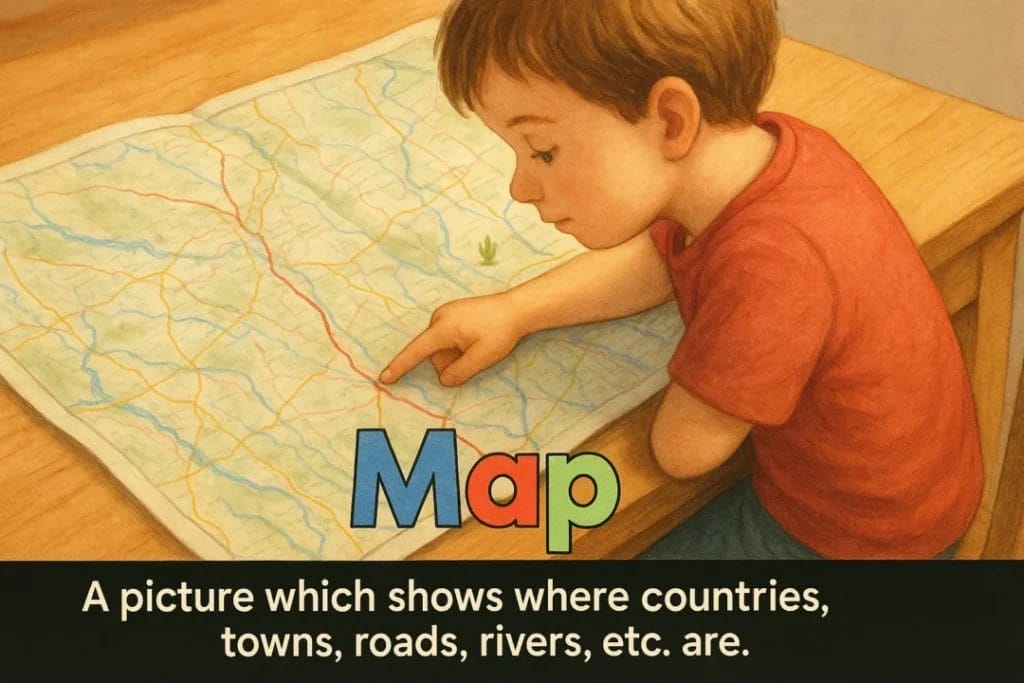
Map Definition: A picture which shows where towns, roads, rivers, etc. are.
- He used a map to find the shortest road to the beach.
- The map showed where the river and the forest were located.
- She looked at the map to plan her trip to a new city.
- Real World Use Case: 🔗 Map on Youglish
Popular Definition: When a lot of people like something.
- The new movie is so popular that the cinema is always full.
- This park is popular because it has a big playground for kids.
- Her songs are popular and played on the radio all the time.
- Real World Use Case: 🔗 Popular on Youglish

Problem Definition: A difficult situation or thing that needs attention.
- The broken bike was a problem because he couldn’t ride to school.
- She had a problem with her phone because it wouldn’t turn on.
- The teacher helped solve the problem when the students didn’t understand the lesson.
- Real World Use Case: 🔗 Problem on Youglish

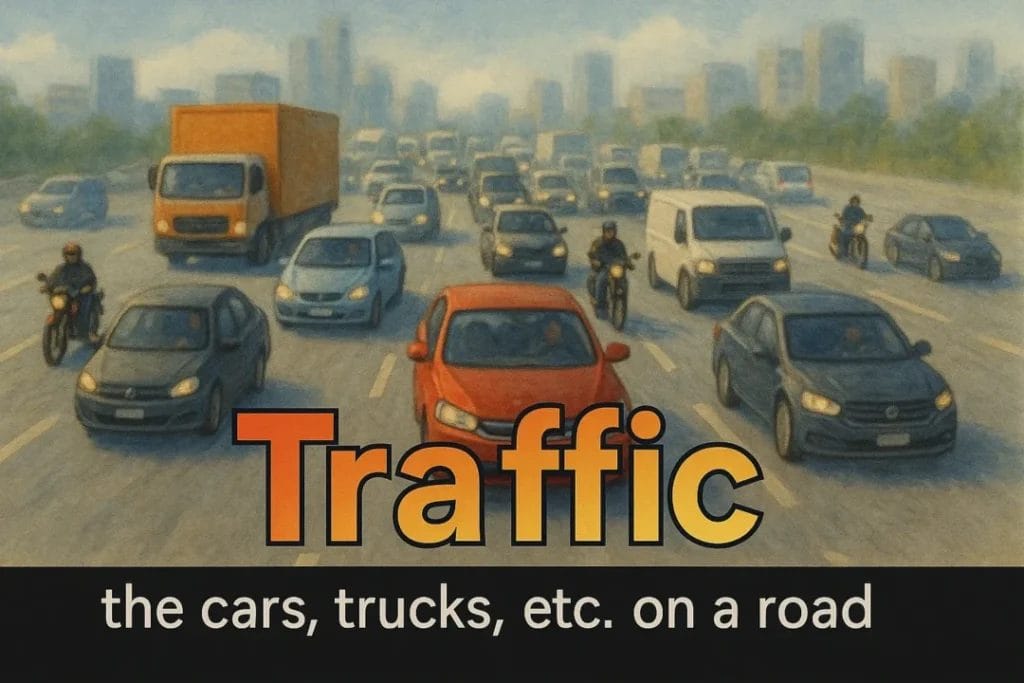
Traffic Definition: The cars, trucks, etc. on a road.
- The traffic was heavy, so it took a long time to get home.
- She avoids driving in the city because the traffic is always bad.
- The traffic moved slowly near the school in the morning.
- Real World Use Case: 🔗 Traffic on Youglish
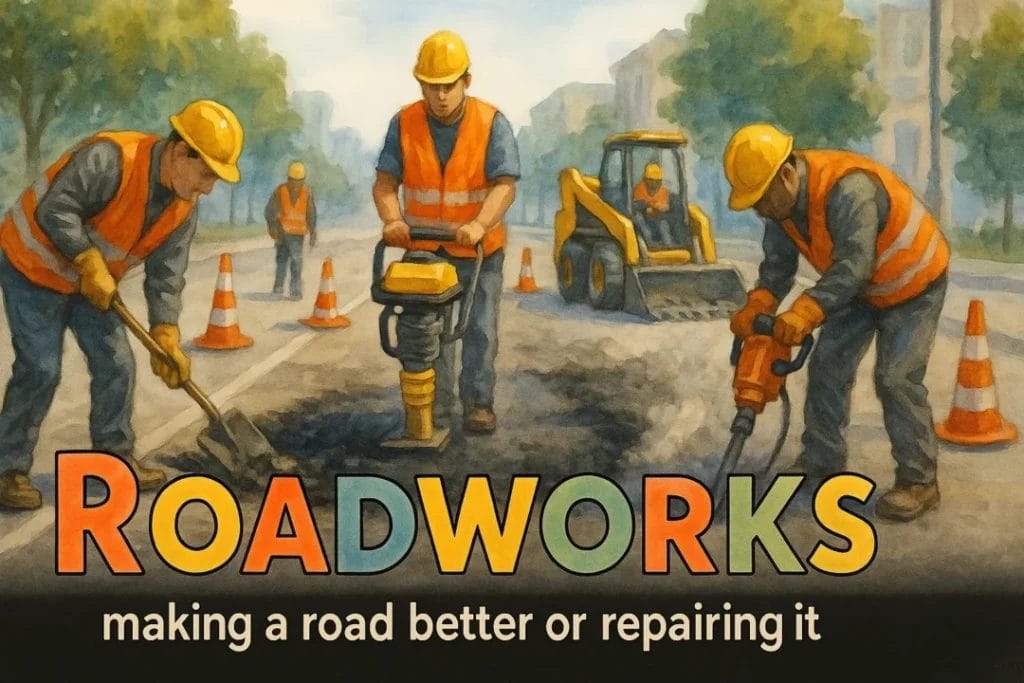
Roadworks Definition: Making a road better or repairing it.
- The roadworks caused a delay because the road was closed.
- They saw workers doing roadworks to fix the broken bridge.
- The roadworks made the street smoother and safer for cars.
- Real World Use Case: 🔗 Roadworks on Youglish
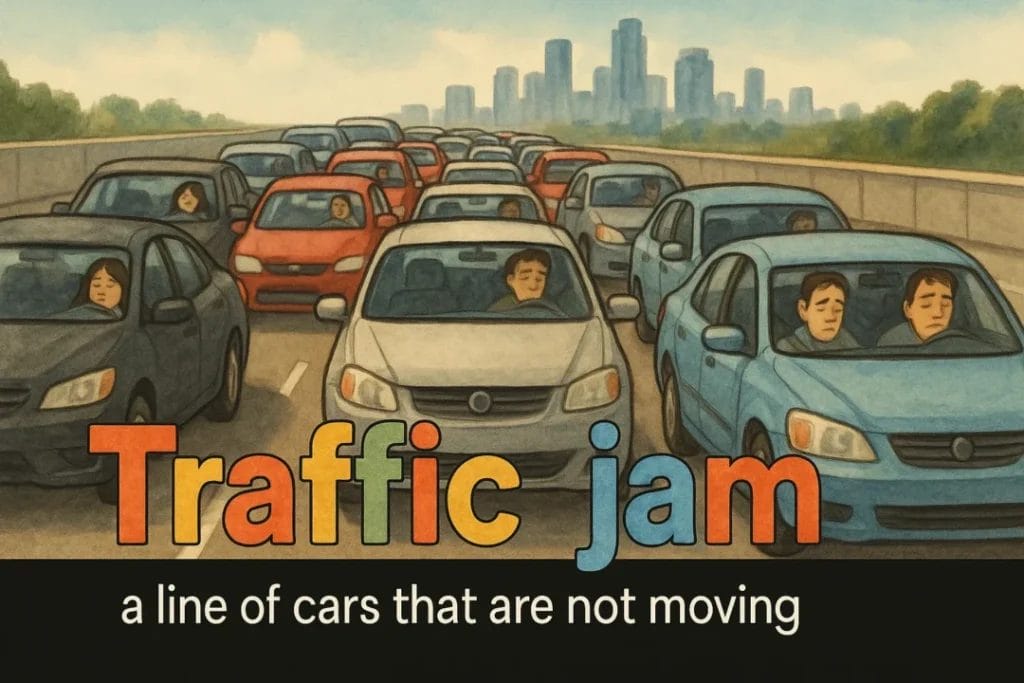
Traffic jam Definition: A line of cars that are not moving.
- We were late because of a traffic jam on the main road.
- The traffic jam lasted for hours, so people turned off their cars.
- A big truck caused a traffic jam by stopping in the middle of the street.
- Real World Use Case: 🔗 Traffic jam on Youglish
Interactive Vocabulary
Activity 1: Multiple Choice Quiz
Choose the correct definition for each word.
Vocabulary Activities
Here are some engaging vocabulary activities related to the words mentioned above. These activities will reinforce the vocabulary you’ve just taught your students.
Matching – Vocabulary Quiz
In this activity, the students will match the words with their respective definitions.
Word Search – Find the hidden words in a letter Grid
In this activity, the students will search for the words that the teacher has taught. The words are hidden in a letter grid.
Spin the Wheel – Find the word
In this game, the teacher will spin a wheel, and eventually, it will stop. When the wheel stops, the students will see the meaning of a specific word. Then, the teacher will ask one of the students to guess the word by carefully reading its definition. The teacher may ask the student to make a sentence for the word.
Unscramble the word or phrase – Vocabulary Quiz
In this activity, the students will move the letters around to put them in the right order and reveal a word or phrase. All these words are connected to the above vocabulary.
Open the box
In this fun activity, the teacher will choose one of the students to participate. First, that student will pick a number. Then, the teacher will click on the chosen number. What happens next? Well, the student will see the meaning of a word—a word related to the vocabulary the teacher has taught in class. Now comes the exciting part: the student needs to read the meaning and guess the word! If the guess is correct, the teacher might even ask the student to create a sentence using that word.