
Unlock 1 -Unit 4 – Places – RW – Vocabulary 2

The vocabulary introduced here is from the “Unlock 1” Reading and Writing book. Specifically, it comes from the unit 4 (Places) and it is the second vocabulary set.
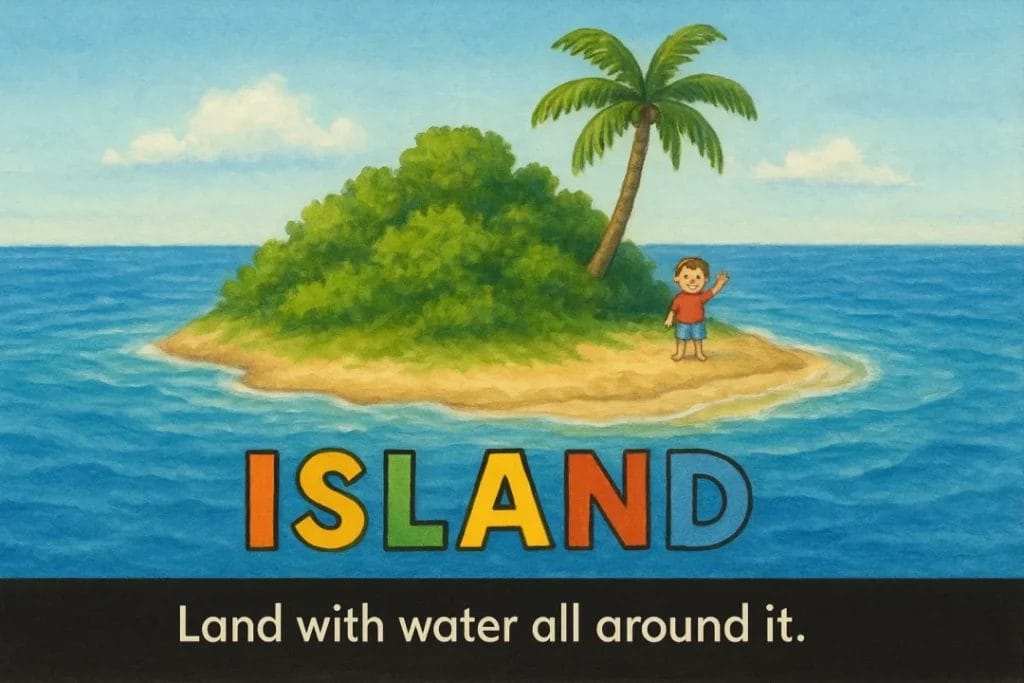
Island Definition: Land with water all around it.
- We took a boat to the island to explore its sandy beaches.
- The island was small but had tall palm trees everywhere.
- She dreamed of living on an island surrounded by blue water.
- Real World Use Case: 🔗 Island on Youglish
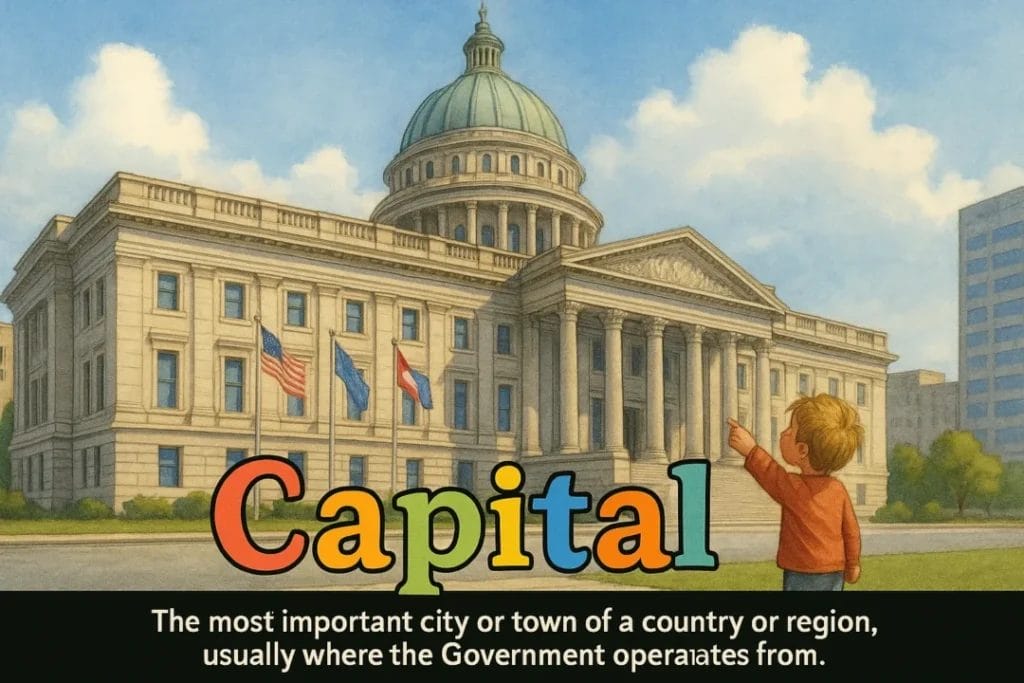
Capital Definition: The most important city or town of a country or region, usually where the Government operates from.
- The capital city has big buildings where the government works.
- She visited the capital to see the president’s office and museums.
- Tokyo is the capital of Japan and a very busy city.
- Real World Use Case: 🔗 Capital on Youglish
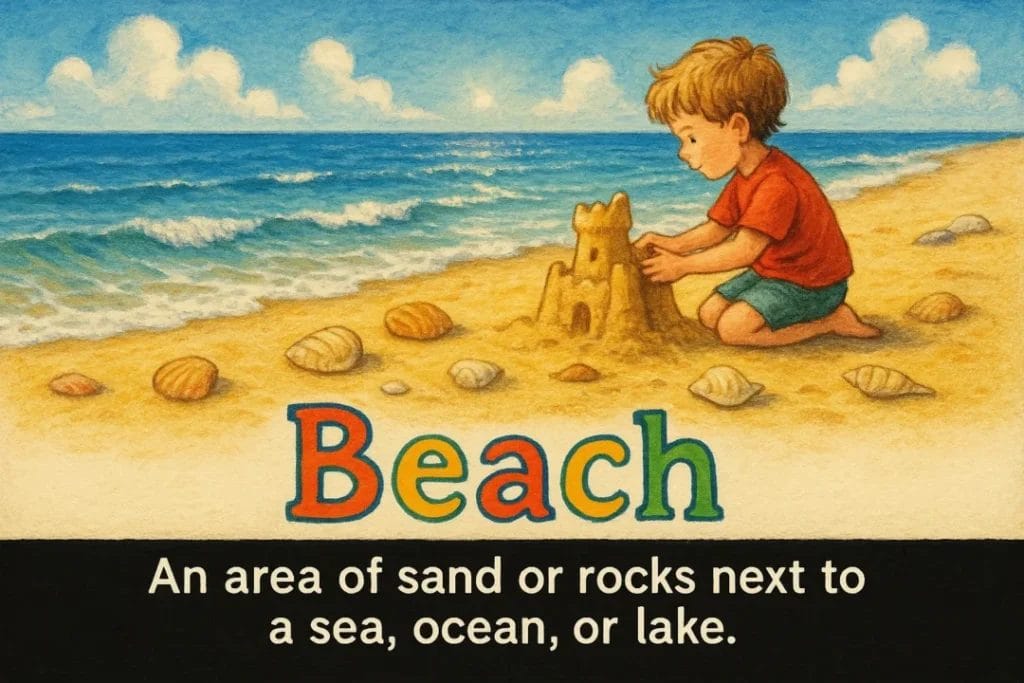
Beach Definition: An area of sand or rocks next to a sea, ocean, or lake.
- We built a sandcastle on the beach near the sea.
- The beach was crowded with people swimming and playing games.
- She walked along the beach to collect shells by the water.
- Real World Use Case: 🔗 Beach on Youglish
Modern Definition: Made with new ideas and designs.
- The modern building had glass walls and bright lights.
- She loves modern art because it uses bold colors and shapes.
- Their house has a modern kitchen with new machines for cooking.
- Real World Use Case: 🔗 Modern on Youglish

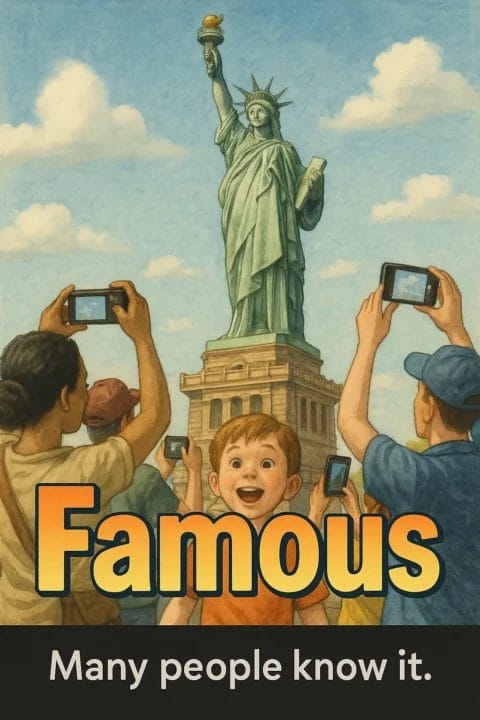
Famous Definition: Many people know it.
- The famous singer performed a concert that everyone talked about.
- This famous tower is visited by thousands of tourists every year.
- She became famous after her book was read all over the world.
- Real World Use Case: 🔗 Famous on Youglish
Tourist Definition: A person who travels and visits places for fun.
- The tourist took photos of the old castle during her trip.
- Many tourists visit the beach to swim and enjoy the sun.
- He met a tourist who traveled from far away to see the city.
- Real World Use Case: 🔗 Tourist on Youglish

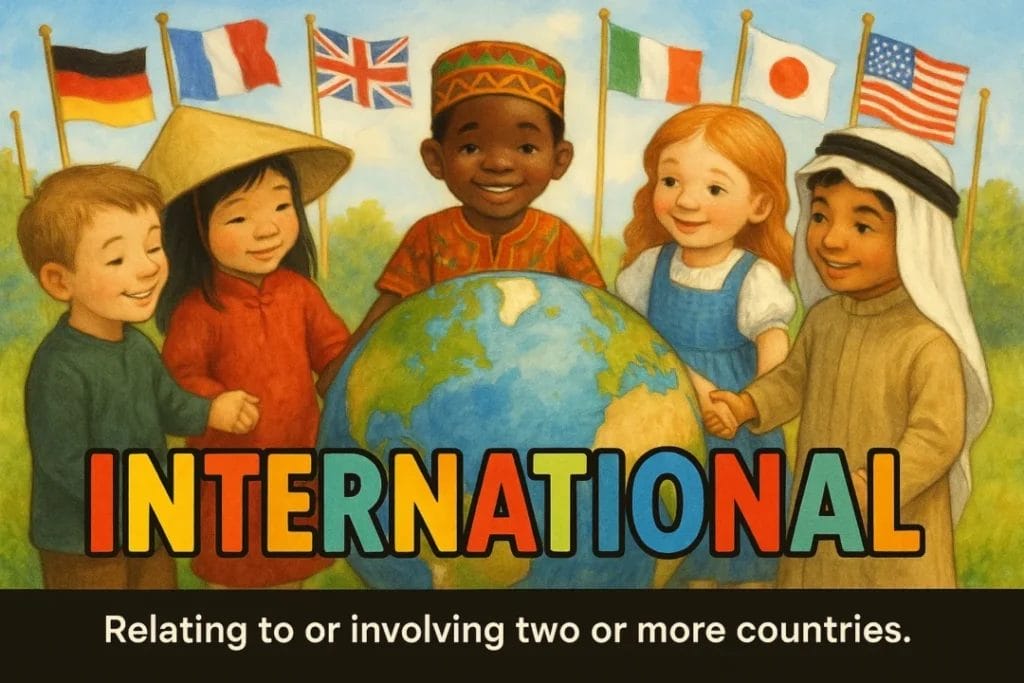
International Definition: Relating to or involving two or more countries.
- The international airport has flights to many countries every day.
- They joined an international club to meet people from different places.
- The international festival celebrated food and music from around the world.
- Real World Use Case: 🔗 International on Youglish
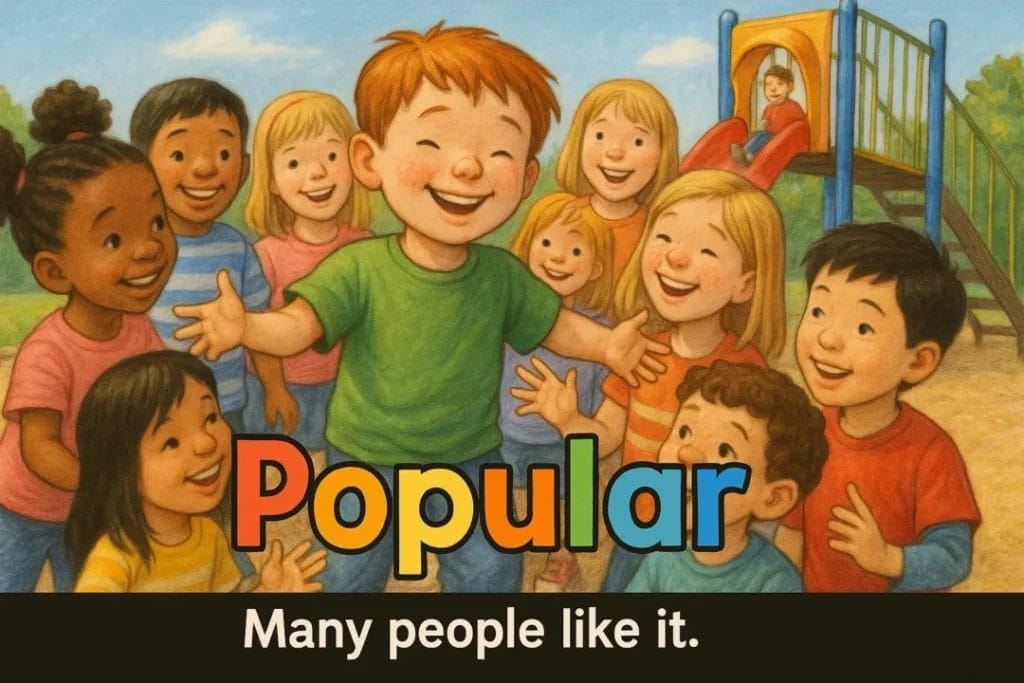
Popular Definition: Many people like it.
- The new ice cream shop is popular because of its tasty flavors.
- This popular game is played by kids all over the school.
- She is a popular teacher because she makes classes fun.
- Real World Use Case: 🔗 Popular on Youglish
Interactive Vocabulary
Activity 1: Multiple Choice Quiz
Choose the correct definition for each word.
Vocabulary Activities
Here are some engaging vocabulary activities related to the words mentioned above. These activities will reinforce the vocabulary you’ve just taught your students.
Matching – Vocabulary Quiz
In this activity, the students will match the words with their respective definitions.
Word Search – Find the hidden words in a letter Grid
In this activity, the students will search for the words that the teacher has taught. The words are hidden in a letter grid.
Spin the Wheel – Find the word
In this game, the teacher will spin a wheel, and eventually, it will stop. When the wheel stops, the students will see the meaning of a specific word. Then, the teacher will ask one of the students to guess the word by carefully reading its definition. The teacher may ask the student to make a sentence for the word.
Unscramble the word or phrase – Vocabulary Quiz
In this activity, the students will move the letters around to put them in the right order and reveal a word or phrase. All these words are connected to the above vocabulary.
Open the box
In this fun activity, the teacher will choose one of the students to participate. First, that student will pick a number. Then, the teacher will click on the chosen number. What happens next? Well, the student will see the meaning of a word—a word related to the vocabulary the teacher has taught in class. Now comes the exciting part: the student needs to read the meaning and guess the word! If the guess is correct, the teacher might even ask the student to create a sentence using that word.