
Unlock 1 – Unit 6 – Homes and buildings – RW – Vocabulary 2

The vocabulary introduced here is from the “Unlock 1” Reading and Writing book. Specifically, it comes from the unit 6 (Homes and buildings) and it is the second vocabulary set.
Costs Definition: When you have to pay money to buy something.
- The ticket to the zoo costs ten dollars, so we saved up to go.
- Buying a new bike costs a lot, but it’s worth it for fun rides.
- The ice cream costs two dollars, which is cheap for a big cone.
- Real World Use Case: 🔗 Costs on Youglish

Terminal Definition: A building where you can get on a plane.
- We waited at the airport terminal to catch our flight to London.
- The terminal was busy with people checking their bags before flying.
- She ran to the terminal to meet her friend arriving from another country.
- Real World Use Case: 🔗 Terminal on Youglish

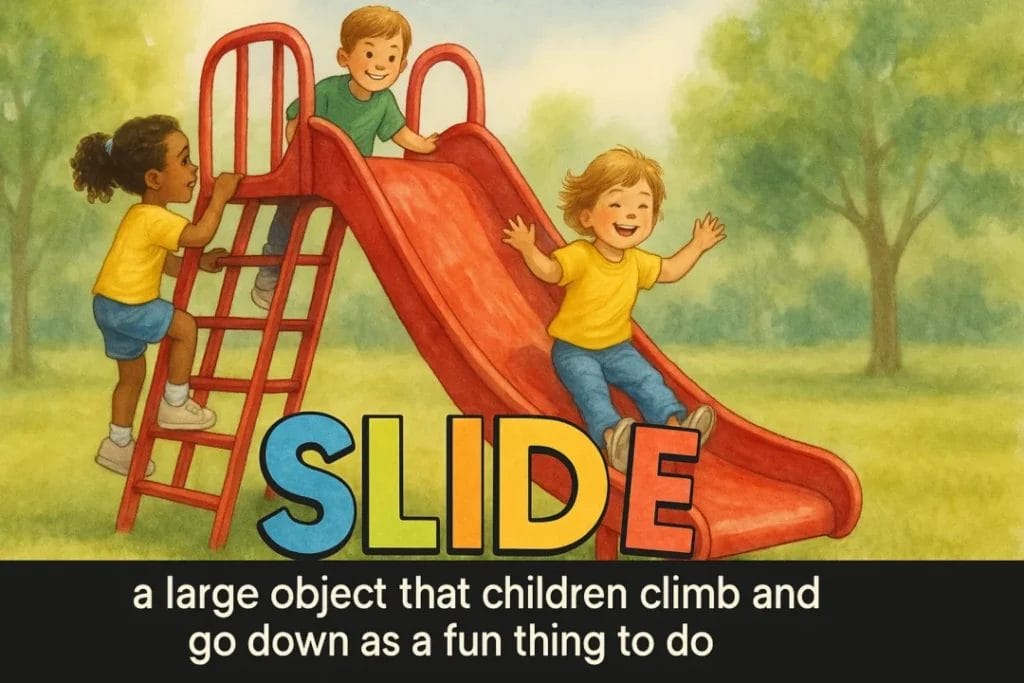
Slide Definition: A large object that children climb and go down as a fun thing to do.
- The kids laughed as they went down the slide at the playground.
- The park has a tall slide that makes playing so exciting.
- She climbed up the slide and slid down with her friends.
- Real World Use Case: 🔗 Slide on Youglish
Relaxed Definition: When you feel happy and comfortable because nothing is worrying you.
- After finishing her homework, she felt relaxed and watched a movie.
- He was relaxed sitting by the lake with no work to think about.
- The warm bath made her feel so relaxed and calm.
- Real World Use Case: 🔗 Relaxed on Youglish

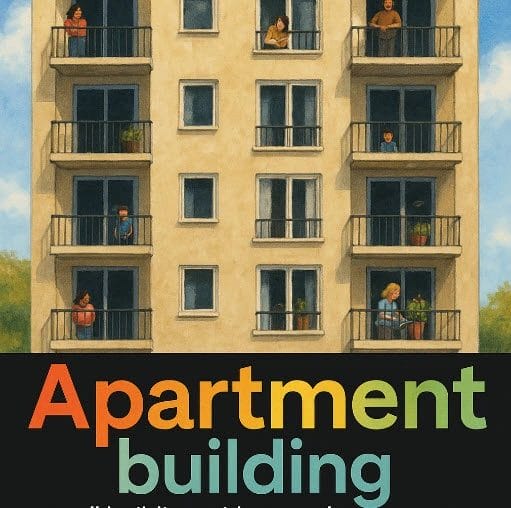
Apartment building Definition: A tall building with many homes (apartments) where people live.
- The apartment building has ten floors with families living on each one.
- She moved into an apartment building near the city center.
- The apartment building has a small garden for everyone to enjoy.
- Real World Use Case: 🔗 Apartment building on Youglish
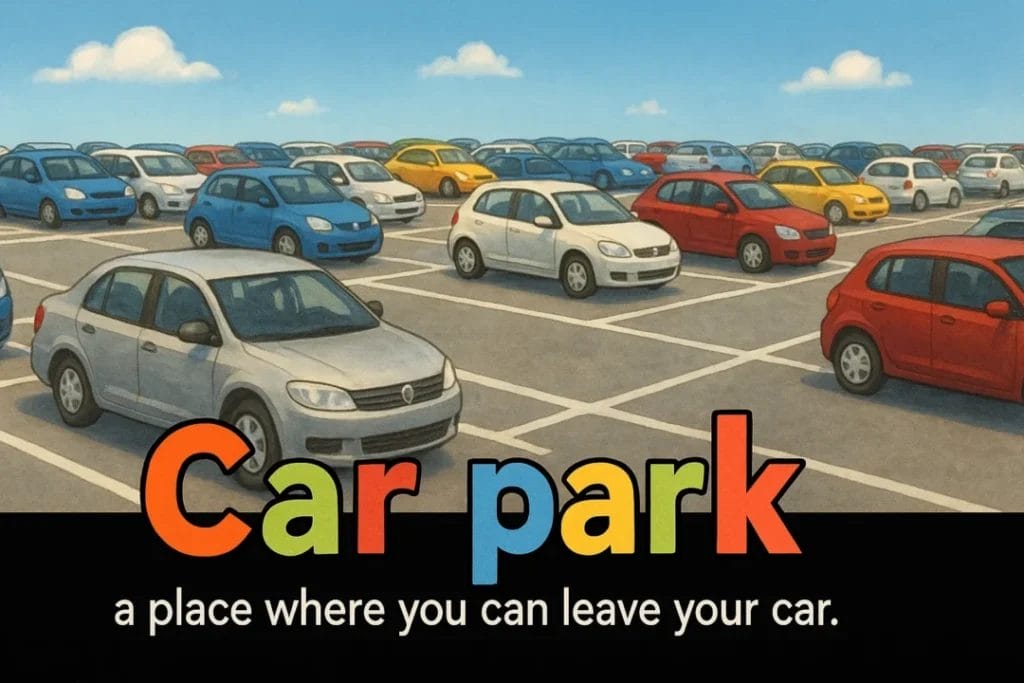
Car park Definition: A place where you can leave your car.
- We left our car in the car park while shopping at the mall.
- The car park near the school was full during the parents’ meeting.
- He found a spot in the car park close to the store entrance.
- Real World Use Case: 🔗 Car park on Youglish
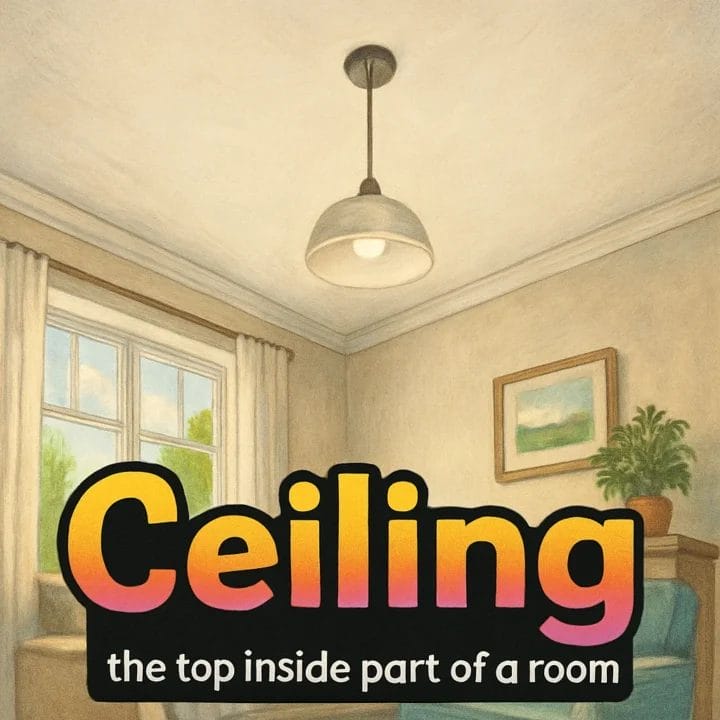
Ceiling Definition: The top inside part of a room.
- The ceiling in the living room was painted white to look bright.
- A spider was crawling on the ceiling above the kitchen table.
- They hung a light from the ceiling to make the room cozy.
- Real World Use Case: 🔗 Ceiling on Youglish
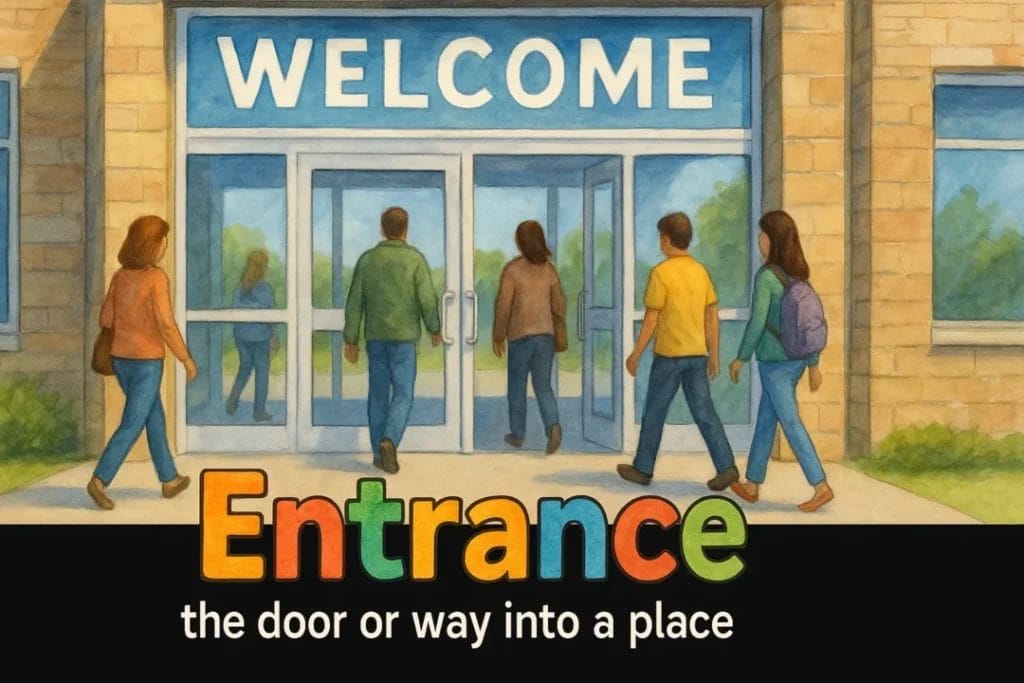
Entrance Definition: The door or way into a place.
- The entrance to the museum was decorated with colorful flowers.
- We waited at the entrance of the school for our friends to arrive.
- The store’s entrance was wide, making it easy to walk in.
- Real World Use Case: 🔗 Entrance on Youglish
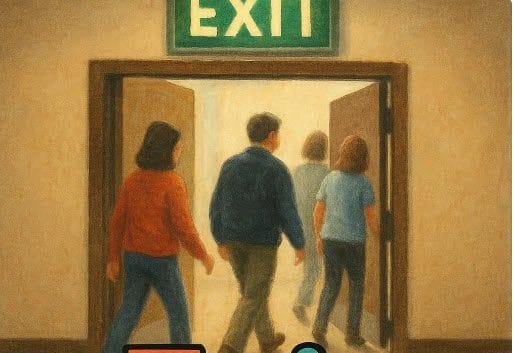
Exit Definition: The door or way out of a place.
- She ran to the exit when the movie ended to avoid the crowd.
- The exit sign was bright red, showing the way out of the building.
- We used the exit at the back of the shop to leave quickly.
- Real World Use Case: 🔗 Exit on Youglish
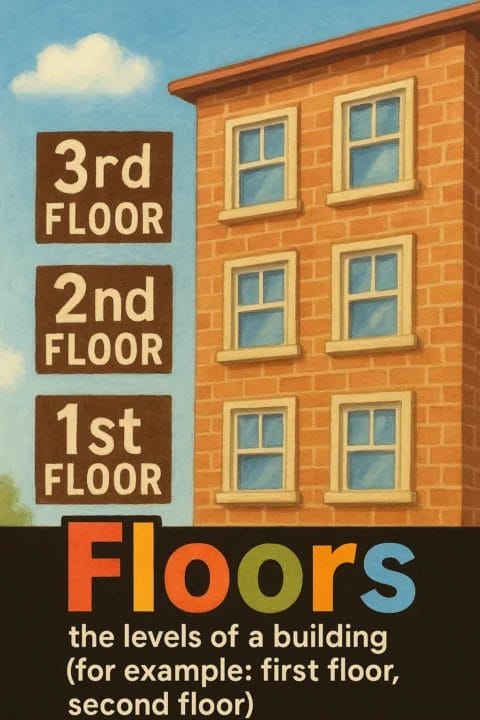
Floors Definition: The levels of a building (for example: first floor, second floor).
- The shop is on the first floor, but the café is on the third floor.
- The floors of the tall building were connected by a big lift.
- She lives on the fifth floor and enjoys the view from her window.
- Real World Use Case: 🔗 Floors on Youglish
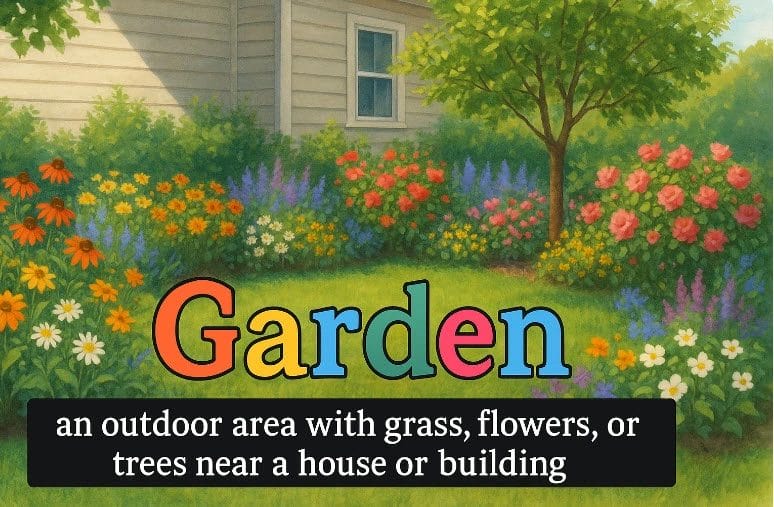
Garden Definition: An outdoor area with grass, flowers, or trees near a house or building.
- The garden was full of colorful flowers and buzzing bees.
- They played soccer in the garden behind their house.
- She planted vegetables in the garden to eat fresh food.
- Real World Use Case: 🔗 Garden on Youglish
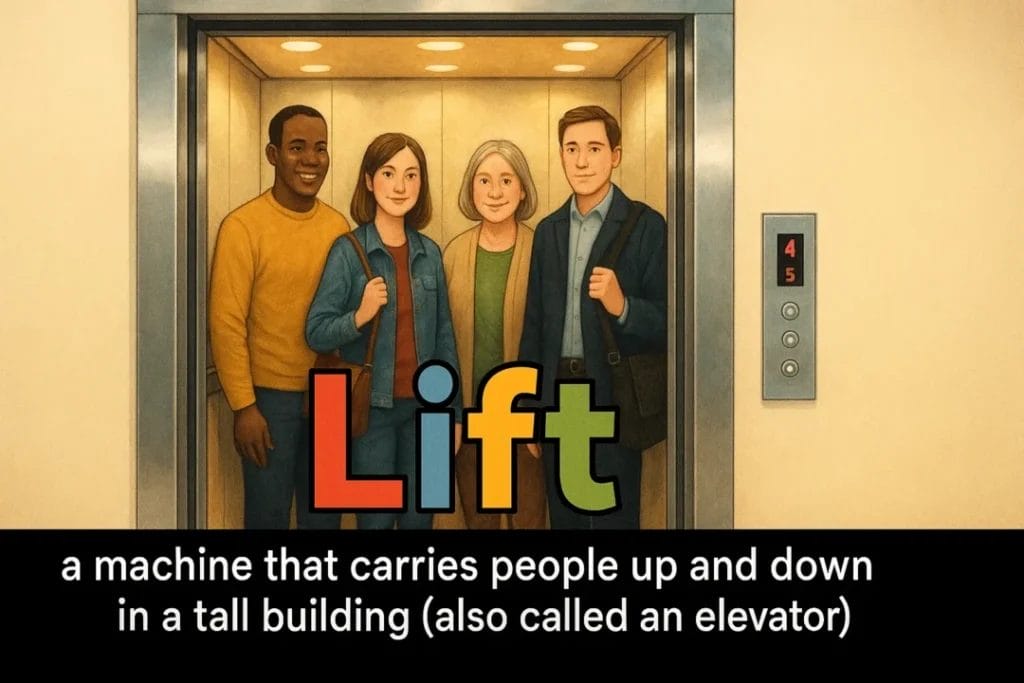
Lift Definition: A machine that carries people up and down in a tall building (also called an elevator).
- We took the lift to the tenth floor because the stairs were too high.
- The lift was full of people going to work in the morning.
- She pressed the button in the lift to go to the ground floor.
- Real World Use Case: 🔗 Lift on Youglish
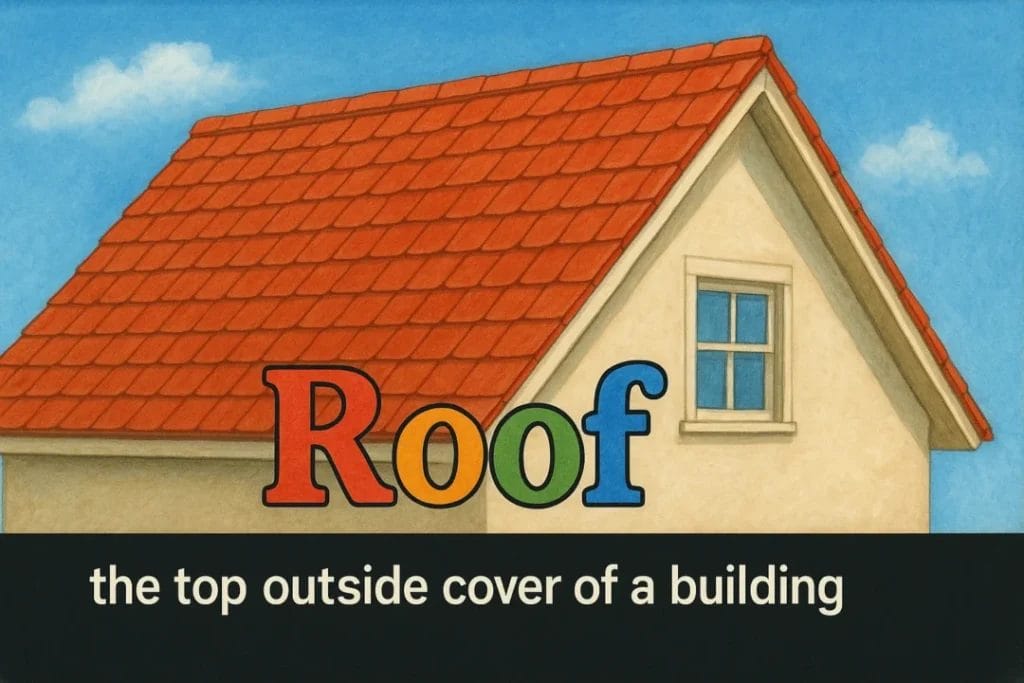
Roof Definition: The top outside cover of a building.
- The roof of the house was covered with red tiles.
- Birds were sitting on the roof of the school in the morning.
- They fixed the roof because it was leaking during the rain.
- Real World Use Case: 🔗 Roof on Youglish
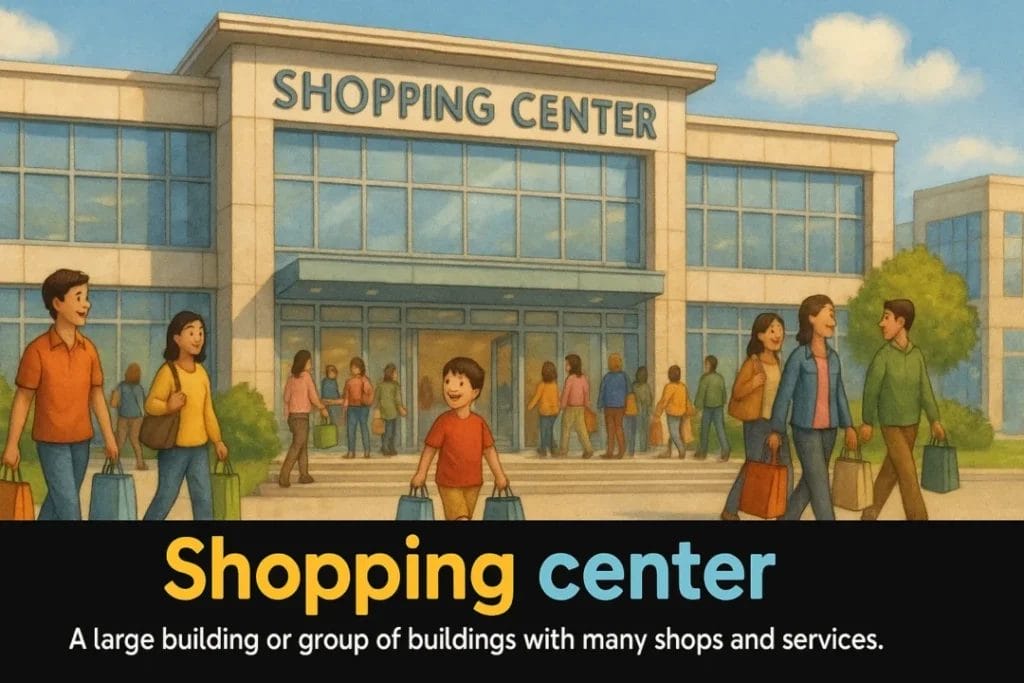
Shopping centre Definition: A large building with many shops inside.
- The shopping centre has a toy store and a food court we love.
- She went to the shopping centre to buy new clothes for school.
- The shopping centre was crowded with people buying gifts for the holidays.
- Real World Use Case: 🔗 Shopping centre on Youglish
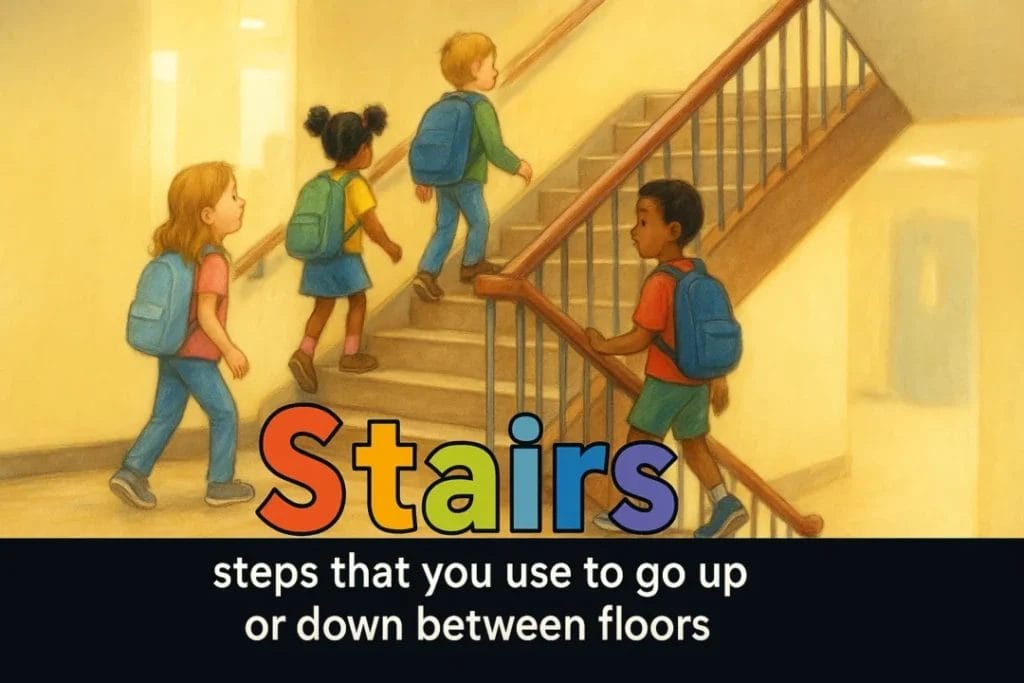
Stairs Definition: Steps that you use to go up or down between floors.
- He climbed the stairs to reach his classroom on the second floor.
- The stairs in the old house were steep and creaky.
- She ran down the stairs to answer the door quickly.
- Real World Use Case: 🔗 Stairs on Youglish
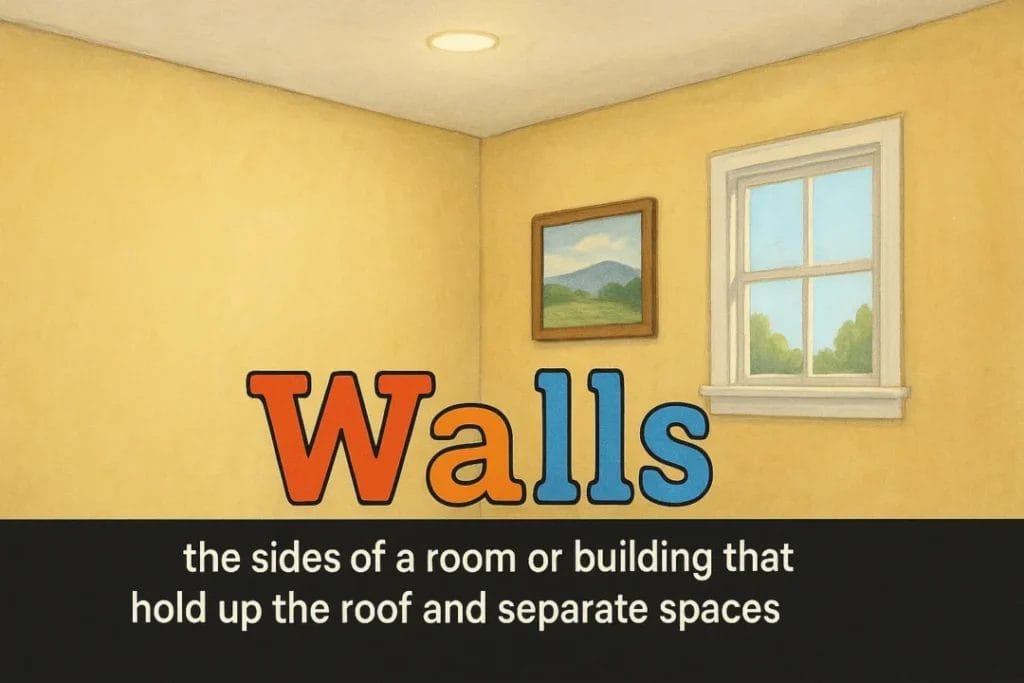
Walls Definition: The sides of a room or building that hold up the roof and separate spaces.
- The walls of her room were painted blue to make it feel calm.
- They hung pictures on the walls to decorate the house.
- The walls of the old castle were made of strong stone.
- Real World Use Case: 🔗 Walls on Youglish
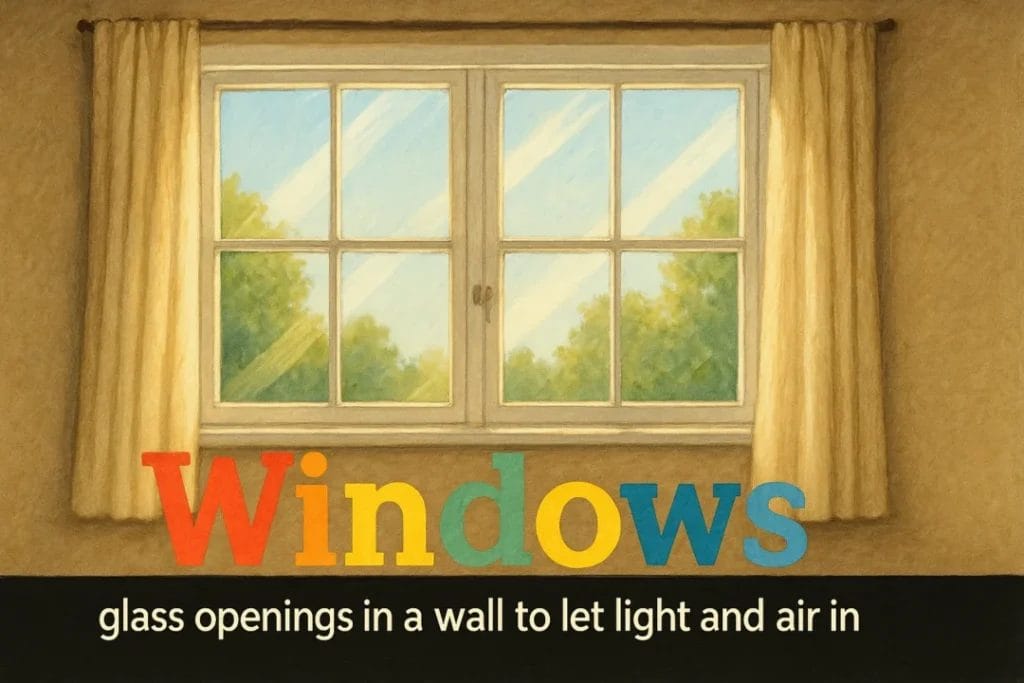
Windows Definition: Glass openings in a wall to let light and air in.
- She opened the windows to let fresh air into the room.
- The windows in the classroom had a view of the park outside.
- He cleaned the windows so they sparkled in the sunlight.
- Real World Use Case: 🔗 Windows on Youglish
Interactive Vocabulary
Activity 1: Multiple Choice Quiz
Choose the correct definition for each word.
Vocabulary Activities
Here are some engaging vocabulary activities related to the words mentioned above. These activities will reinforce the vocabulary you’ve just taught your students.
Matching – Vocabulary Quiz
In this activity, the students will match the words with their respective definitions.
Word Search – Find the hidden words in a letter Grid
In this activity, the students will search for the words that the teacher has taught. The words are hidden in a letter grid.
Spin the Wheel – Find the word
In this game, the teacher will spin a wheel, and eventually, it will stop. When the wheel stops, the students will see the meaning of a specific word. Then, the teacher will ask one of the students to guess the word by carefully reading its definition. The teacher may ask the student to make a sentence for the word.
Unscramble the word or phrase – Vocabulary Quiz
In this activity, the students will move the letters around to put them in the right order and reveal a word or phrase. All these words are connected to the above vocabulary.
Open the box
In this fun activity, the teacher will choose one of the students to participate. First, that student will pick a number. Then, the teacher will click on the chosen number. What happens next? Well, the student will see the meaning of a word—a word related to the vocabulary the teacher has taught in class. Now comes the exciting part: the student needs to read the meaning and guess the word! If the guess is correct, the teacher might even ask the student to create a sentence using that word.